

AI Visuals & Motion
Product imagery that matches across a whole catalogue
Every angle, every background, every placement — from the photo you already have. One product shot once, then put wherever it has to go.
We are proud to work with these companies















Fit
Who this is for.
You have one photo per product, and it was taken on a phone on a counter.
Your listings look like six different shops because they were shot on six different days.
A studio day costs more than the products in it, and you need forty of them.
Scope
What arrives.
The imagery
- Clean pack shots on white, sized for marketplaces and product pages
- The same product on as many grounds as you need — marble, wood, linen, stone
- Lifestyle and in-context frames, lit to match the rest of the set
- Campaign frames with real art direction, labelled as stylised
- Colourways and variants without reshooting any of them
The system around it
- A written recipe — light, angle, ground, margin — so the next batch matches this one
- Every placement cropped and composed, not the square squashed into a banner
- Marketplace, social, banner and story sizes, each composed for its frame
- Retouching and cleanup of the photography you already own
- Files delivered organised and named, ready to upload rather than to sort
Standard
8 things ship as standard.
The part nobody sees is the part that makes a catalogue look like one catalogue. None of it varies with how many products you have.
True of every set
- The product is never altered — colour, finish, shape and label are the ones you sent
- A stated recipe, so a batch produced in six months still matches this one
- Scale held constant across products, so a 15ml bottle looks smaller than a 150ml one
- One light direction and one shadow behaviour across the whole set
- Colour corrected, never recoloured — a cast is retouching, a repaint is not
- Every frame labelled by kind, so your team always knows which set it is reaching for
- sRGB, because that is what a browser and a marketplace actually render
- Master files handed over at full resolution, yours to keep
Add-ons
And what you can bolt on.
None of these is assumed, and none is padding. Each is quoted on its own, so you can see exactly what it adds and take the ones you want.
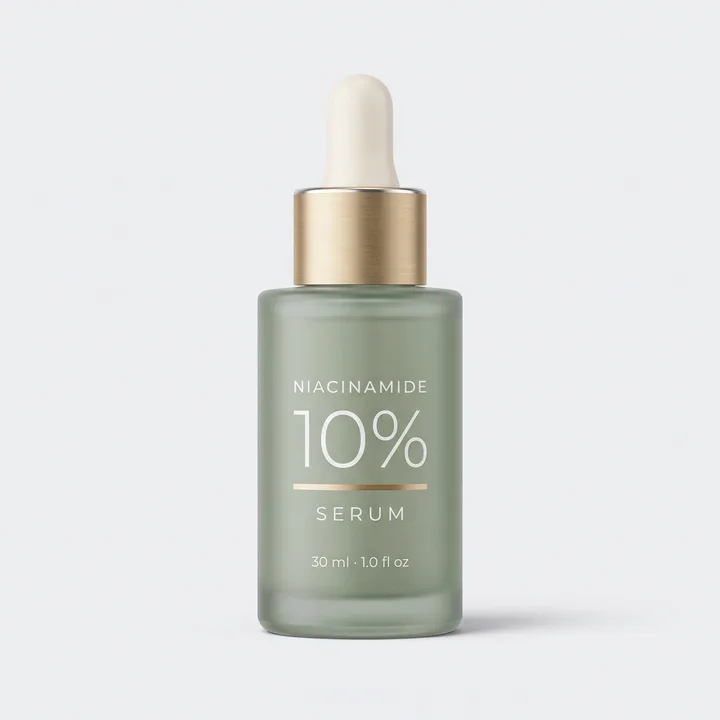
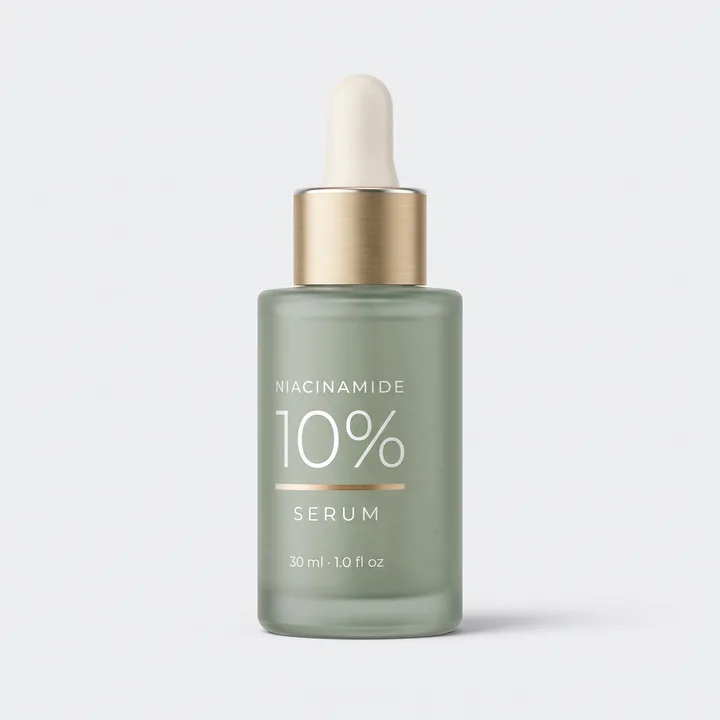
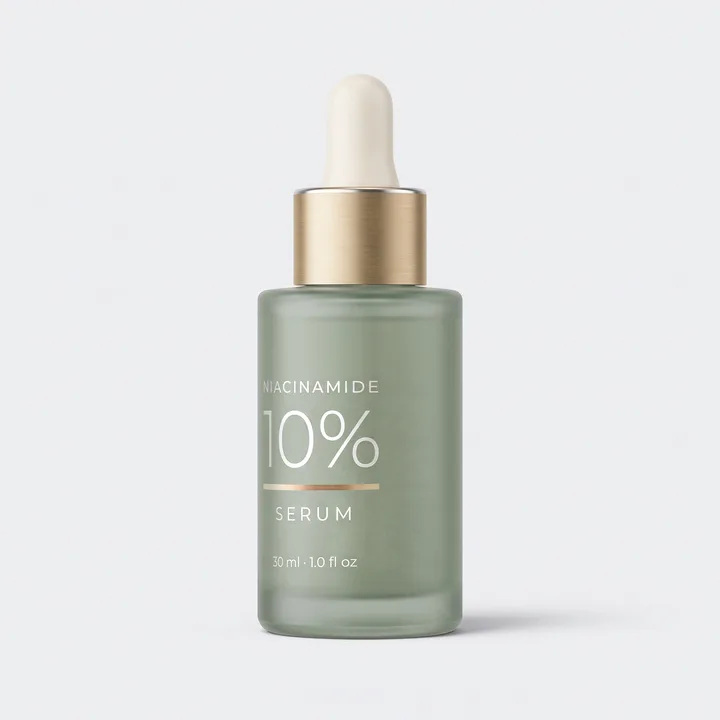
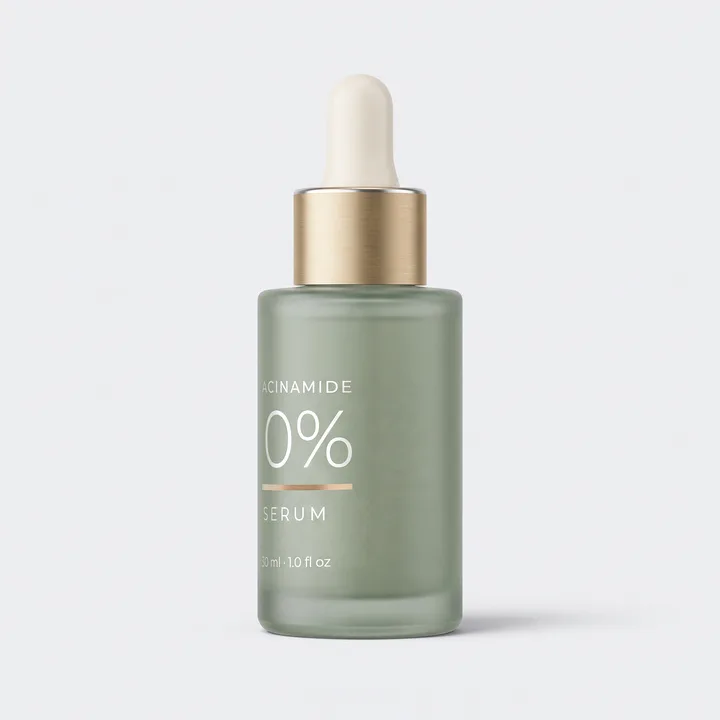
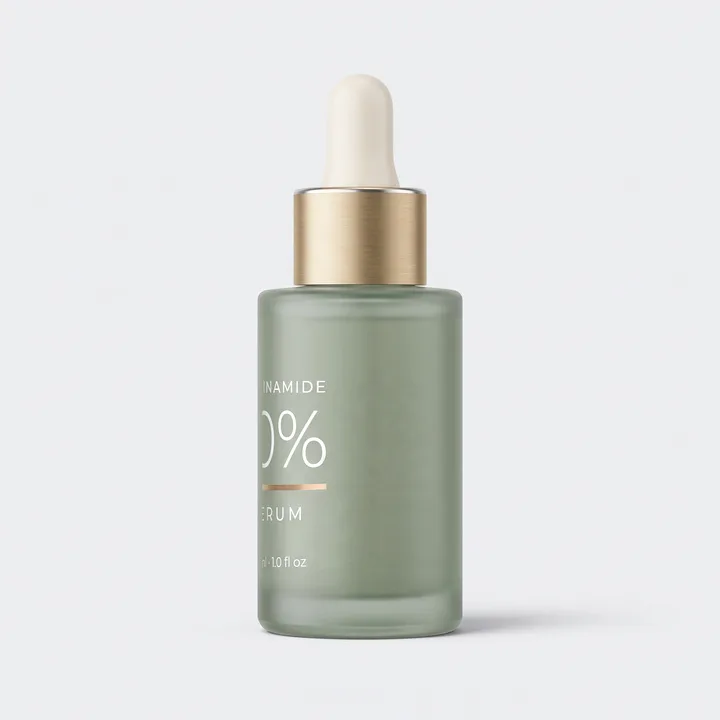
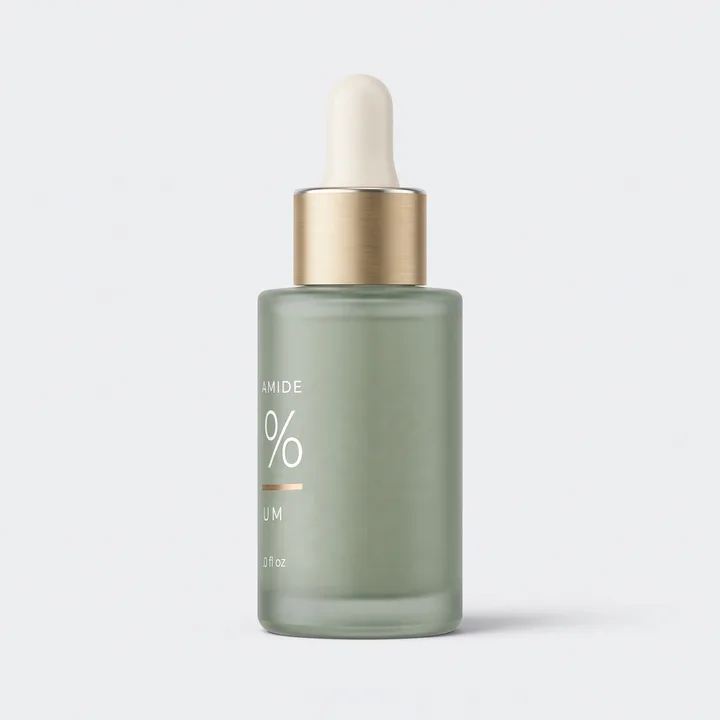
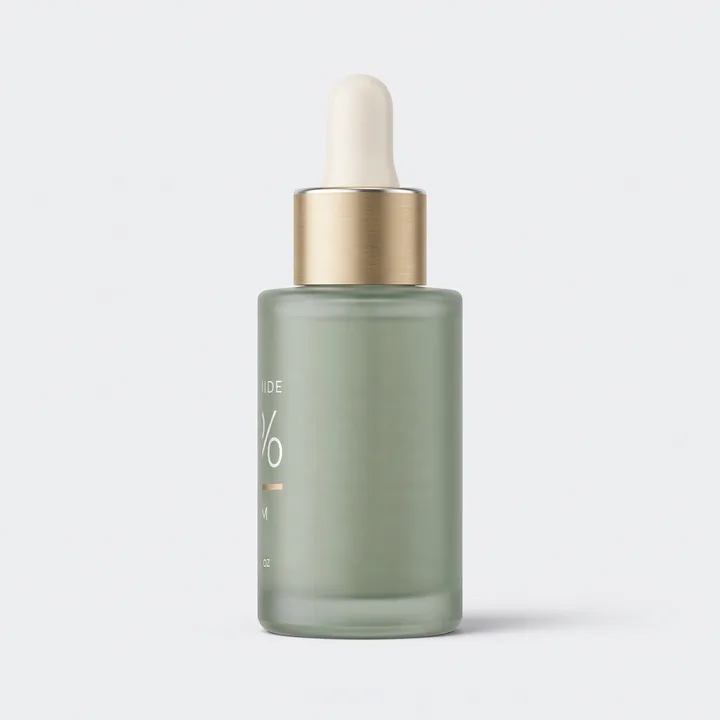
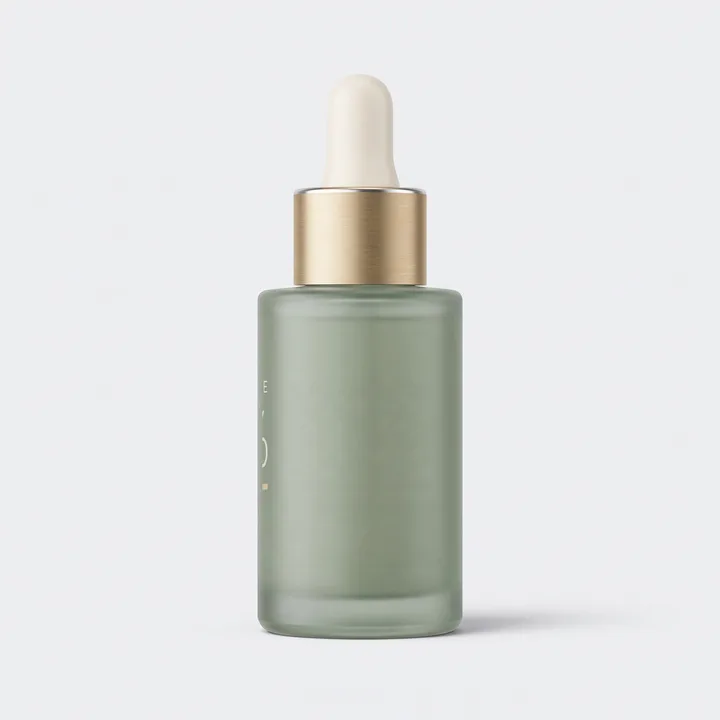
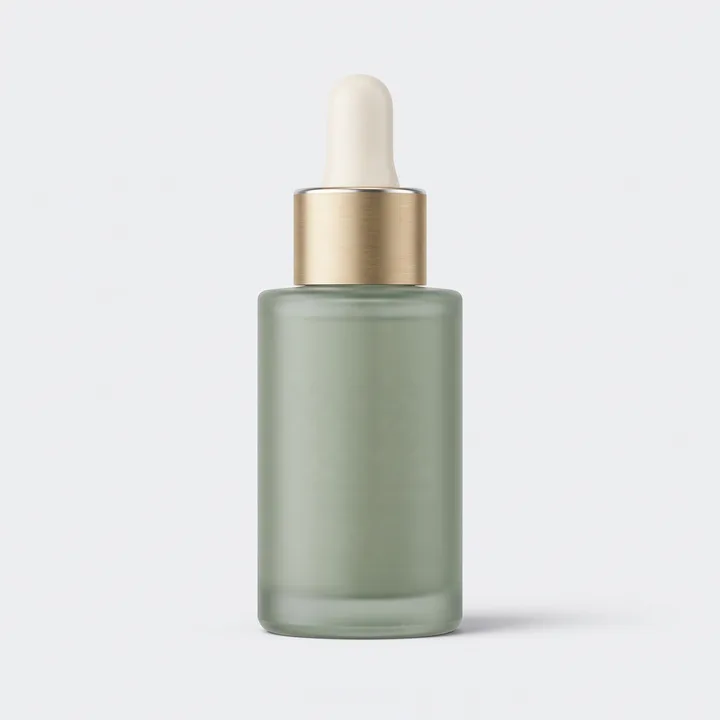
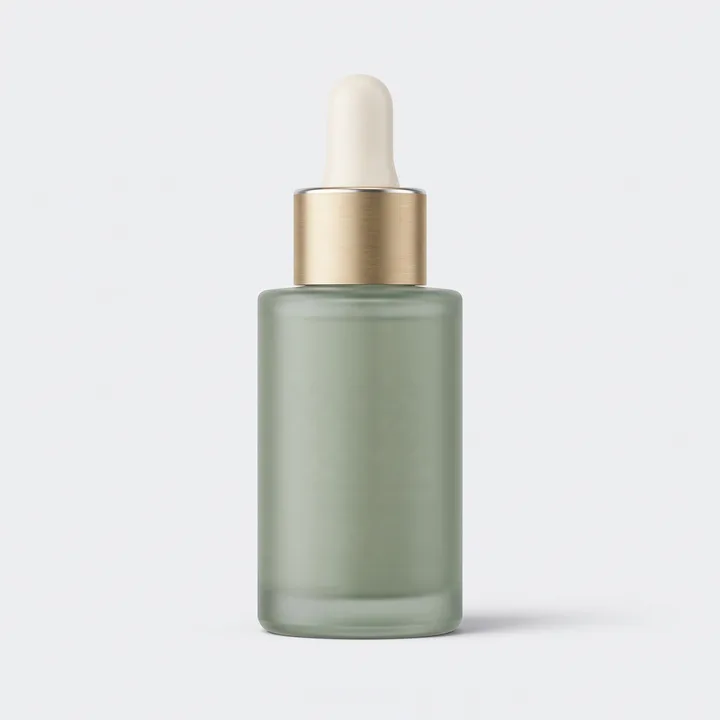
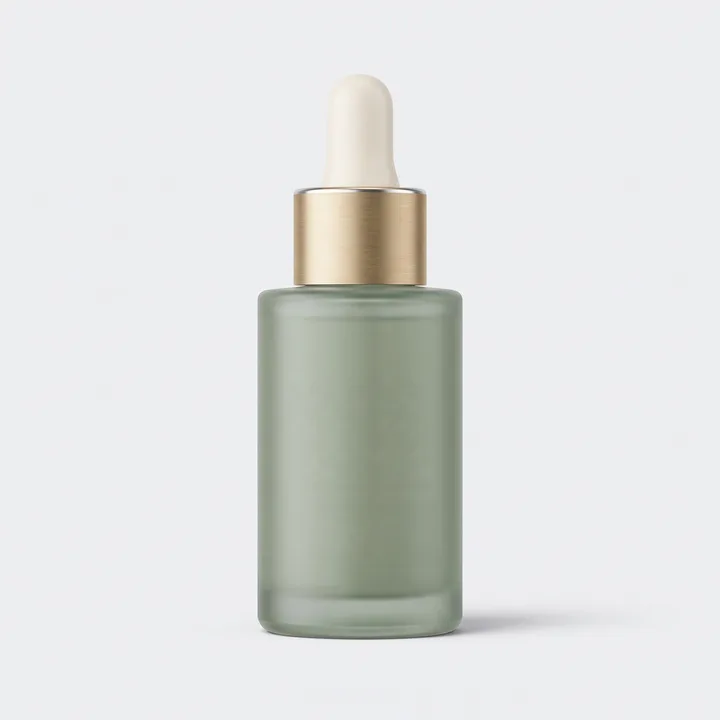
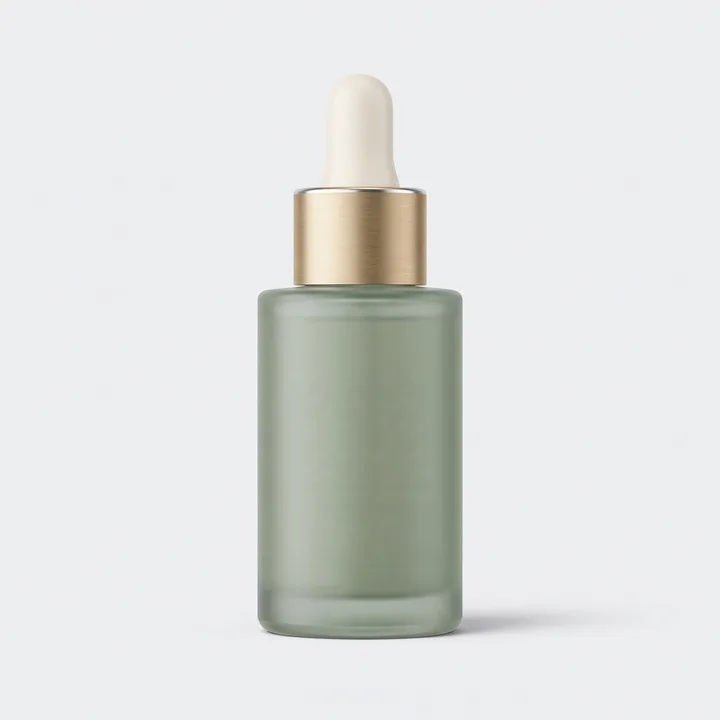
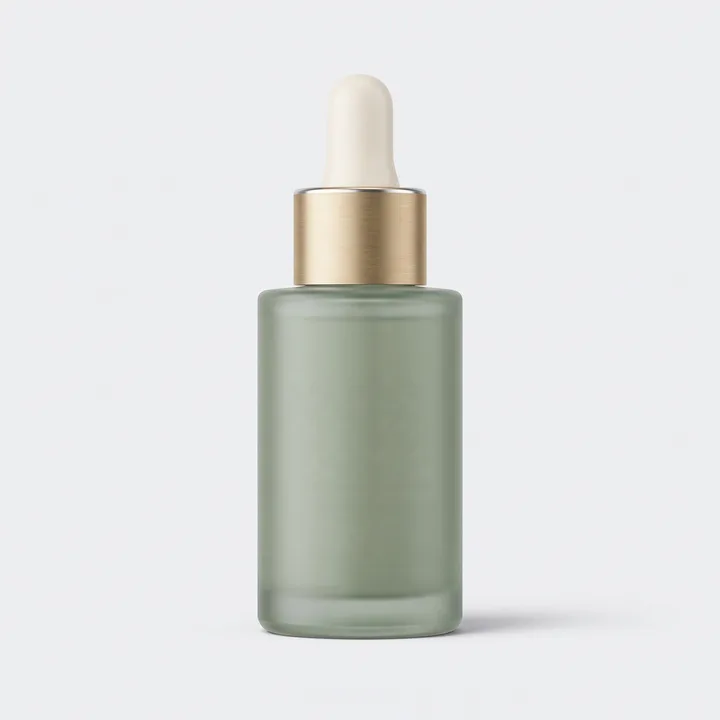
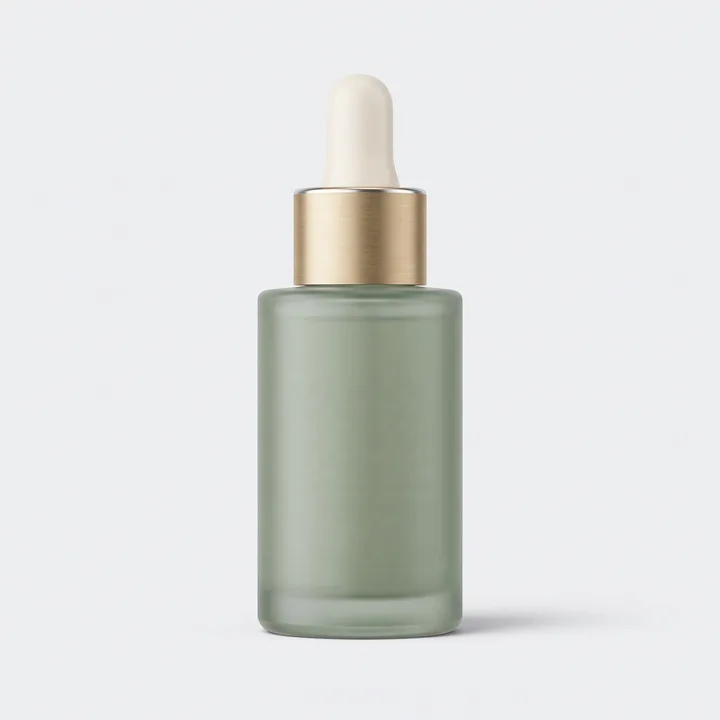
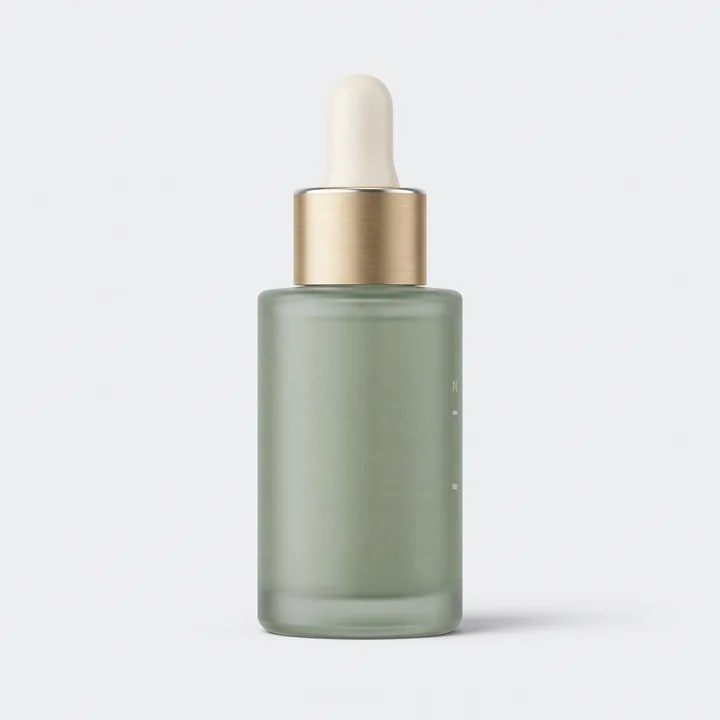
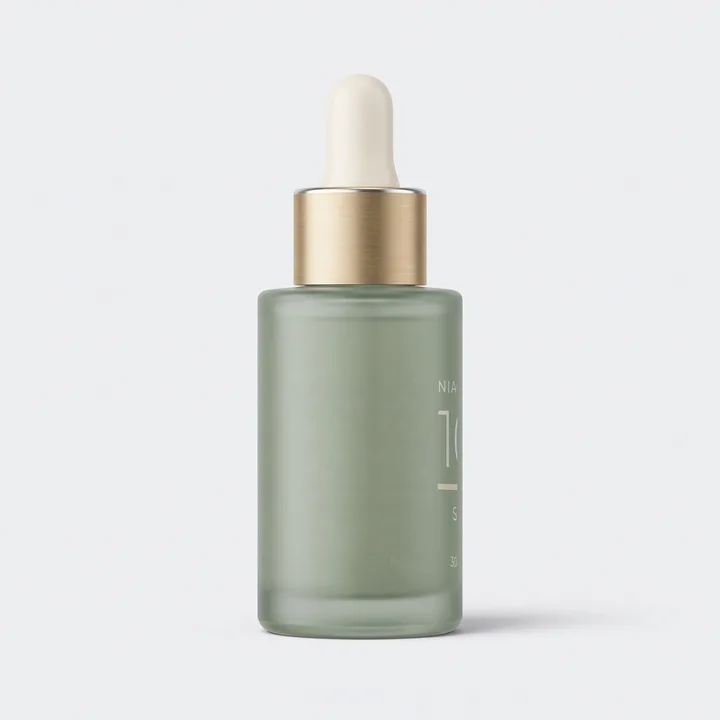
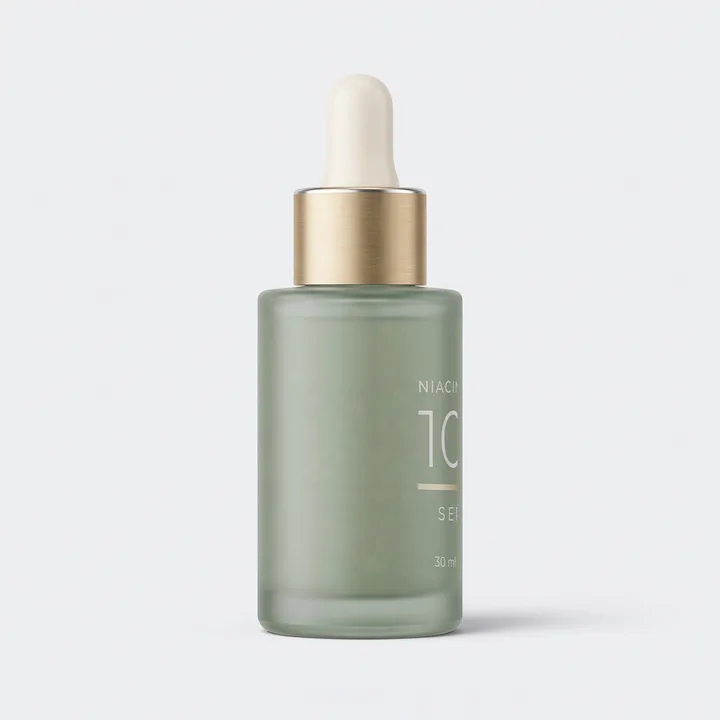
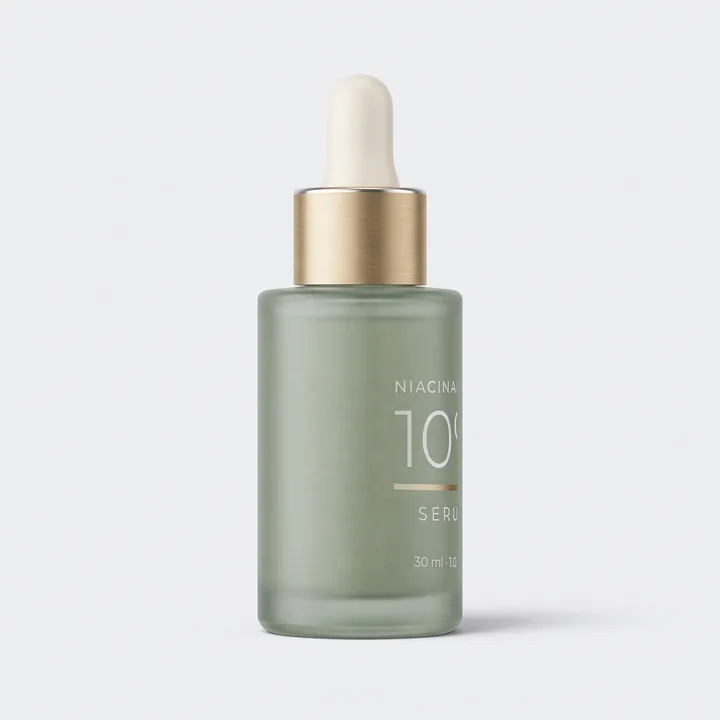
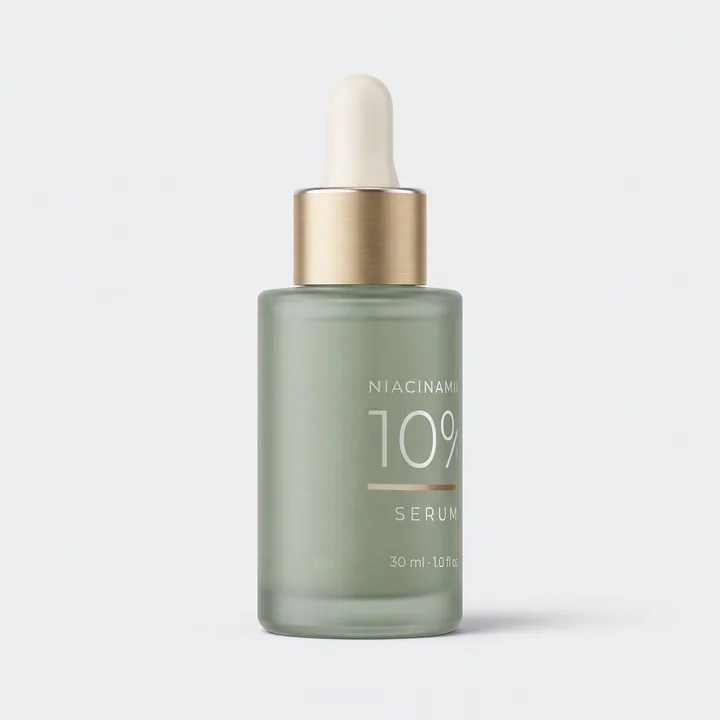
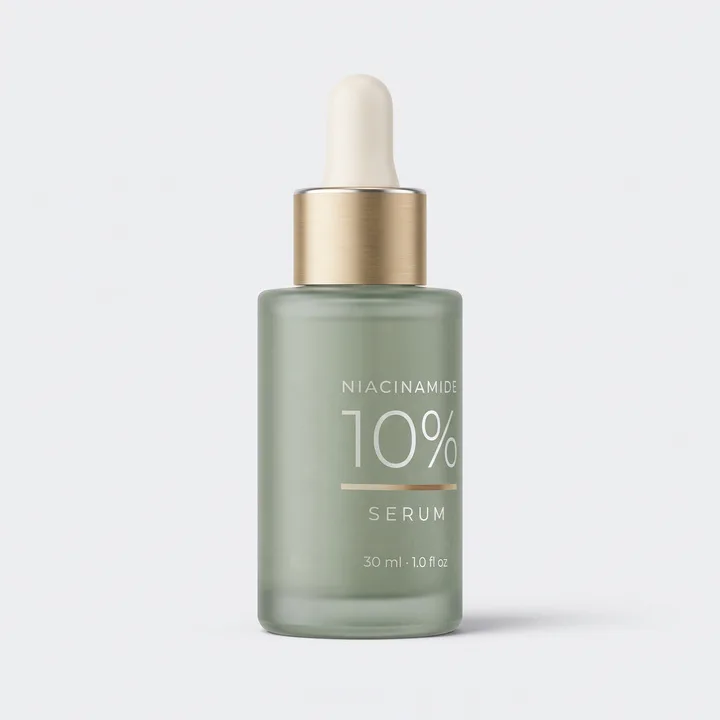
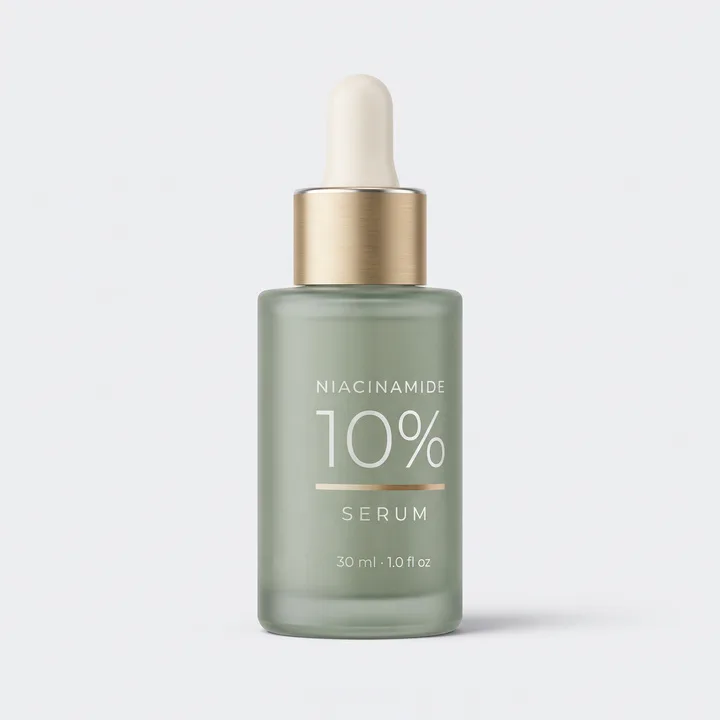
The first add-on in the list, working. Twenty-four angles of one bottle — drag it, or use the arrow keys.
Going further
- A 360 spin the customer can drag
- Short looping motion for a hero banner or social
- Model and in-hand shots
- Seasonal or campaign refreshes on the same products
- Bulk output across a full catalogue
Working together
How it runs.
Send what you have
A packshot, a phone photo taken on a counter, or a box of the actual product. All three are workable starting points — the phone photo as genuinely as the studio file, which is the part most people do not believe until they have seen it done.
A paid first product
We take a single product through to finished frames and settle the recipe on it — the light, the ground, the angle, the margin. It is quoted and paid as its own piece of work, and the frames are yours whether or not the rest of the catalogue follows. Nothing else starts until you have signed off what the set is going to look like.
The rest to that recipe
Every other product goes through the same settings, so the catalogue matches rather than each item being art-directed separately. Holding one specification across forty products is the discipline the whole service is built on, and it is the part a shoot-by-shoot approach cannot reproduce.
Delivered organised
Full resolution, named and foldered by product and placement, with the recipe written down so a batch produced later still matches.
What we need from you
- The best photo you already have of each product — a phone shot is fine
- The actual product, where the detail matters more than a photo can carry
- Anything the imagery must stay true to: a Pantone, a finish, a label that has to be legible
- Where the images are going — a marketplace, your own store, ads, or all three
Where it started
Same bottle. Two starting points.
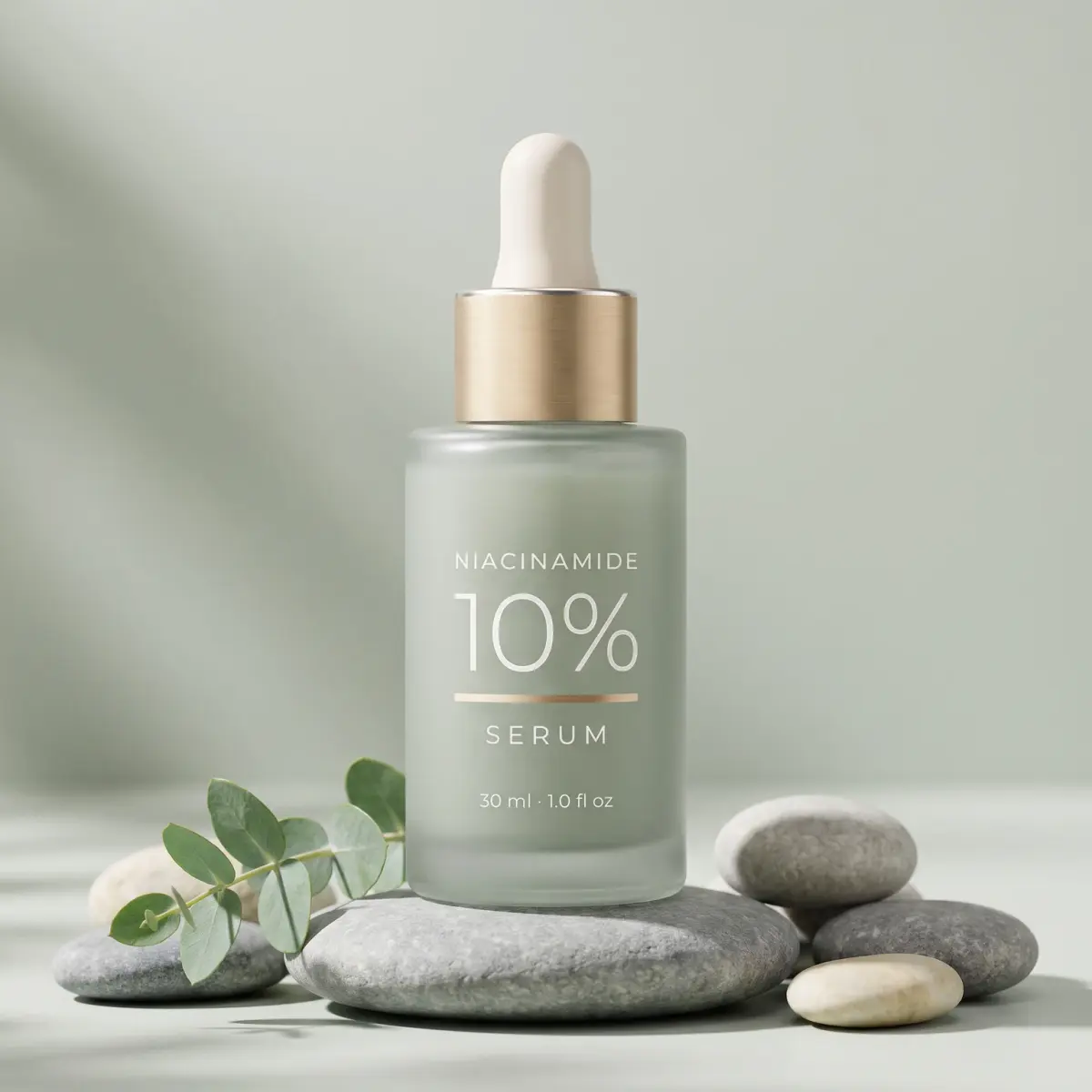
One of these sets began as a studio pack shot. The other began as a phone photo on a bathroom counter, soap still in frame. Same product, same finish, same standard — which is the point. The starting point changes the work, not the result.
A phone photo. What most businesses actually have — a bathroom counter, the ceiling light, and whatever else was on the shelf.
Catalogue-accurateListing-ready. The product exactly as it is.
- Started withA phone photo
- Marketplace white
- Marble
- Dark, backlit
- Lifestyle
A pack shot. What a store already owns and never uses for anything else — the flat catalogue image.
Catalogue-accurateListing-ready. The product exactly as it is.
- Started withA pack shot
- Marketplace white
- Marble
- Oak
- Linen
StylisedArt direction on the scene. Campaigns, banners, social, print.
- Podium
- Splash
- Botanical
- Blinds
- Pebbles
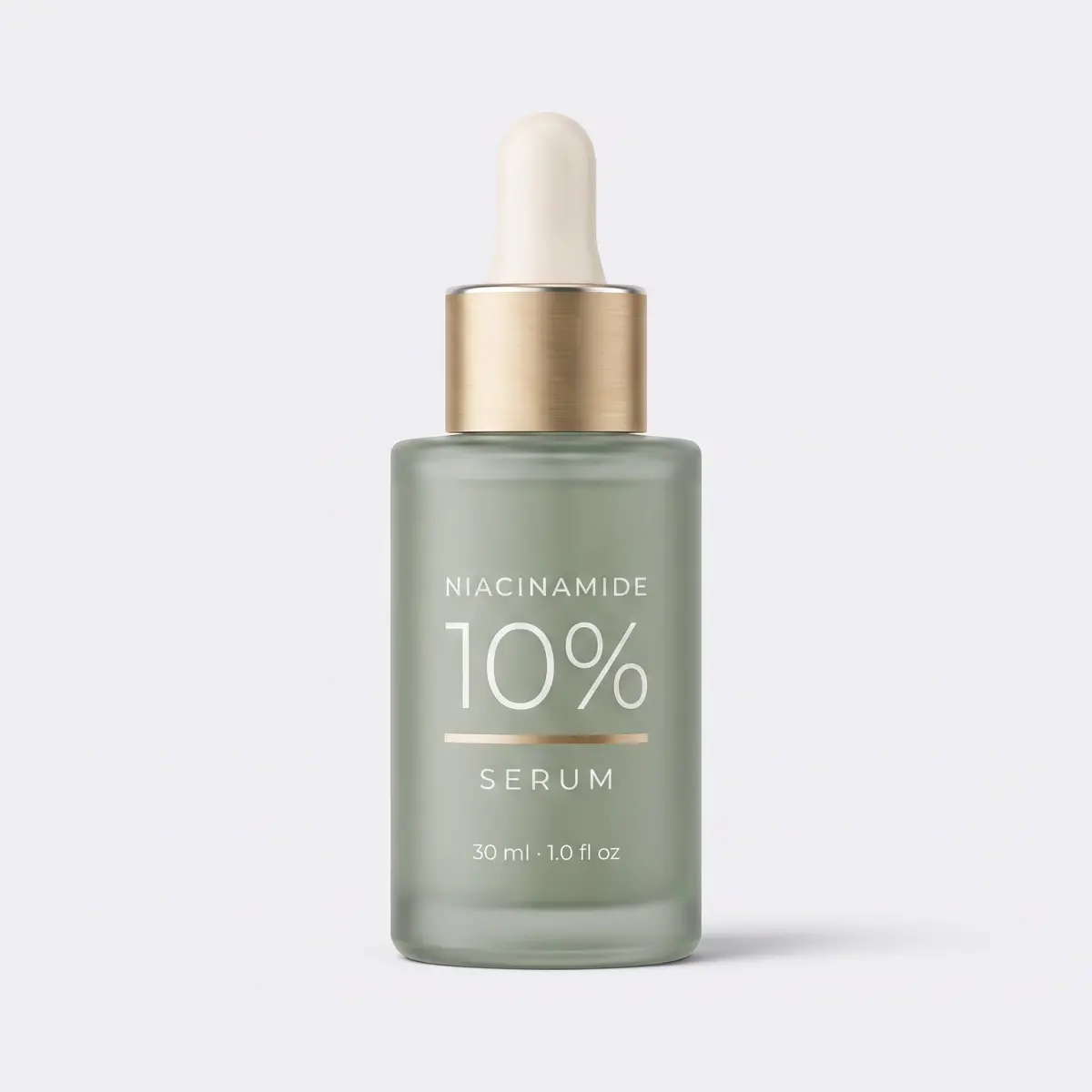
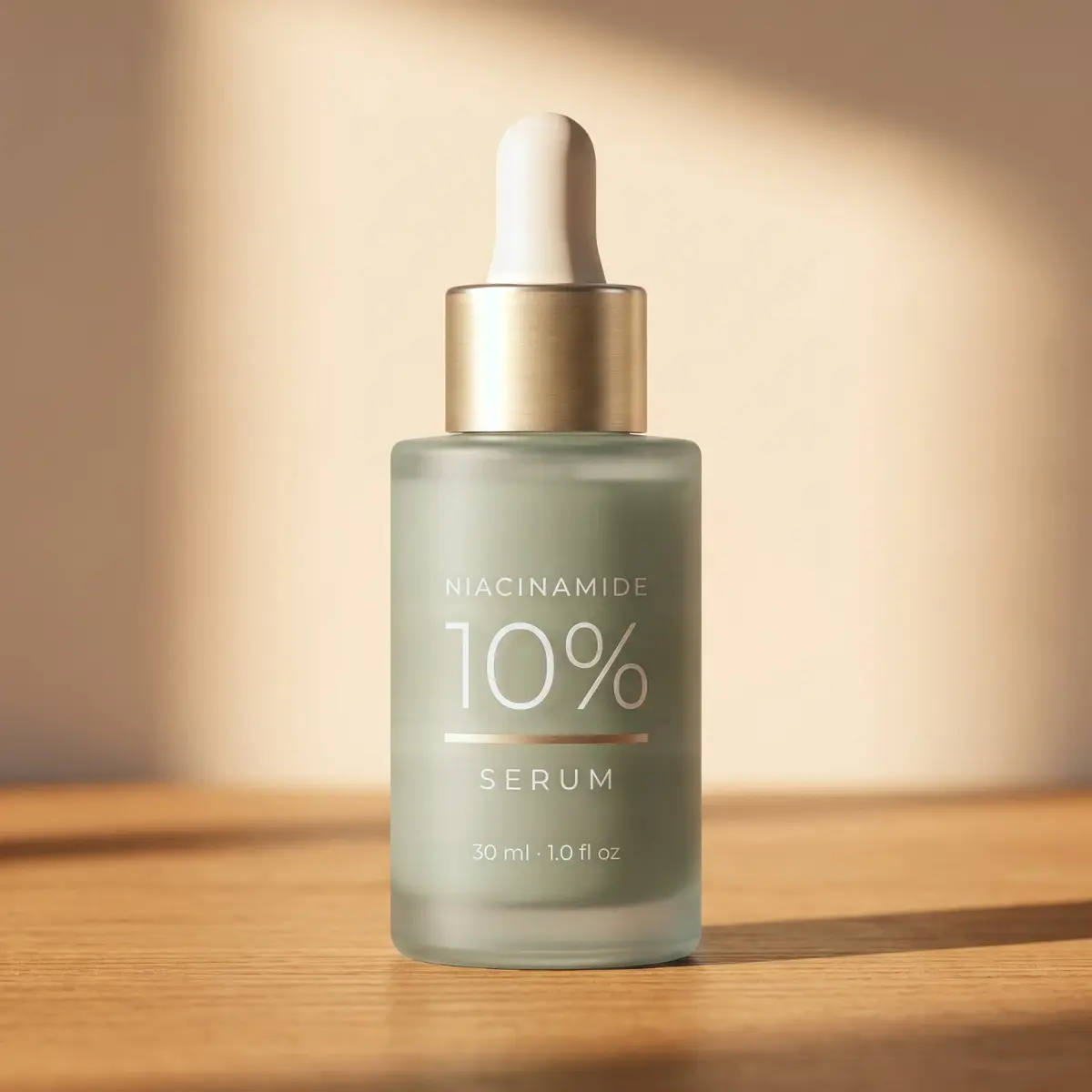
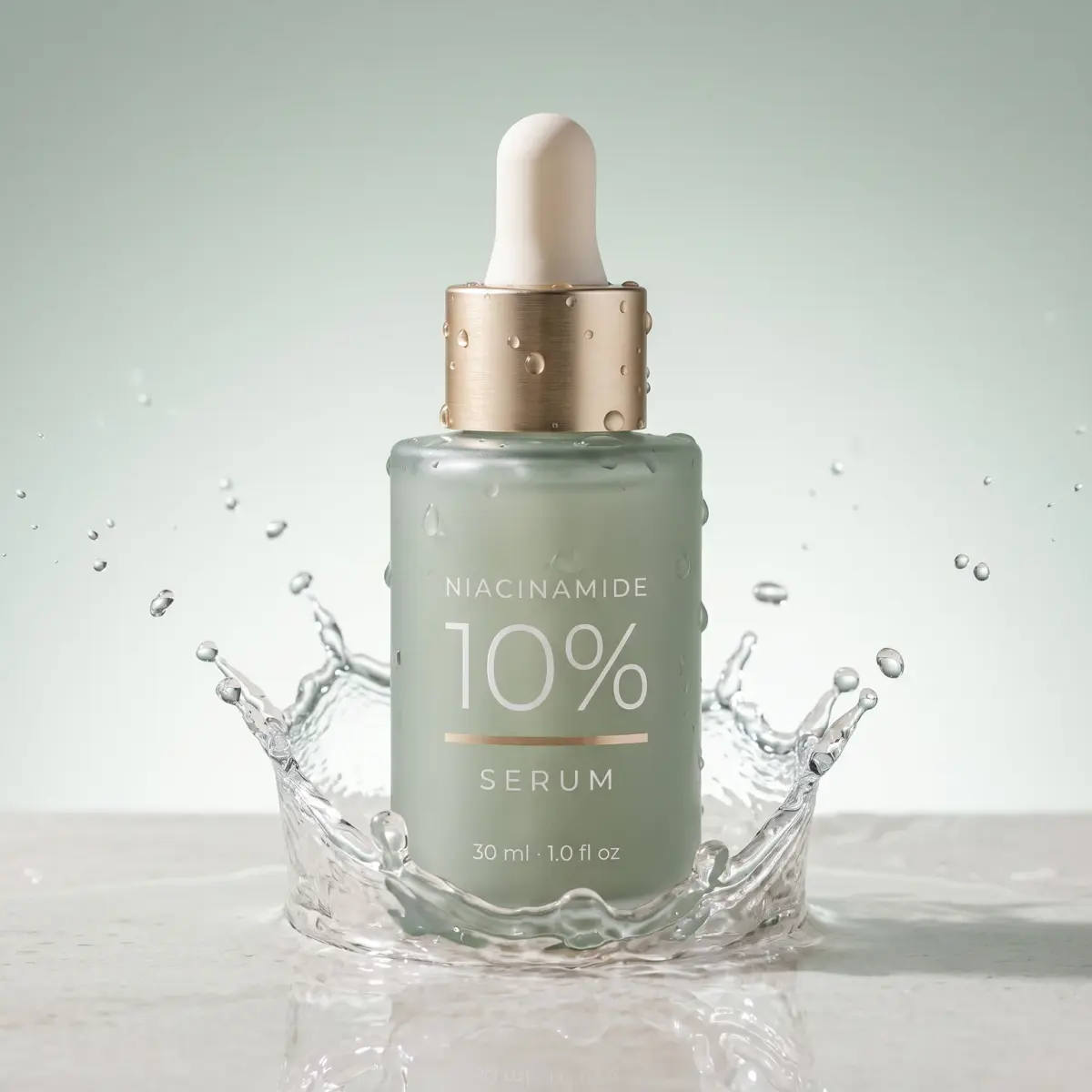
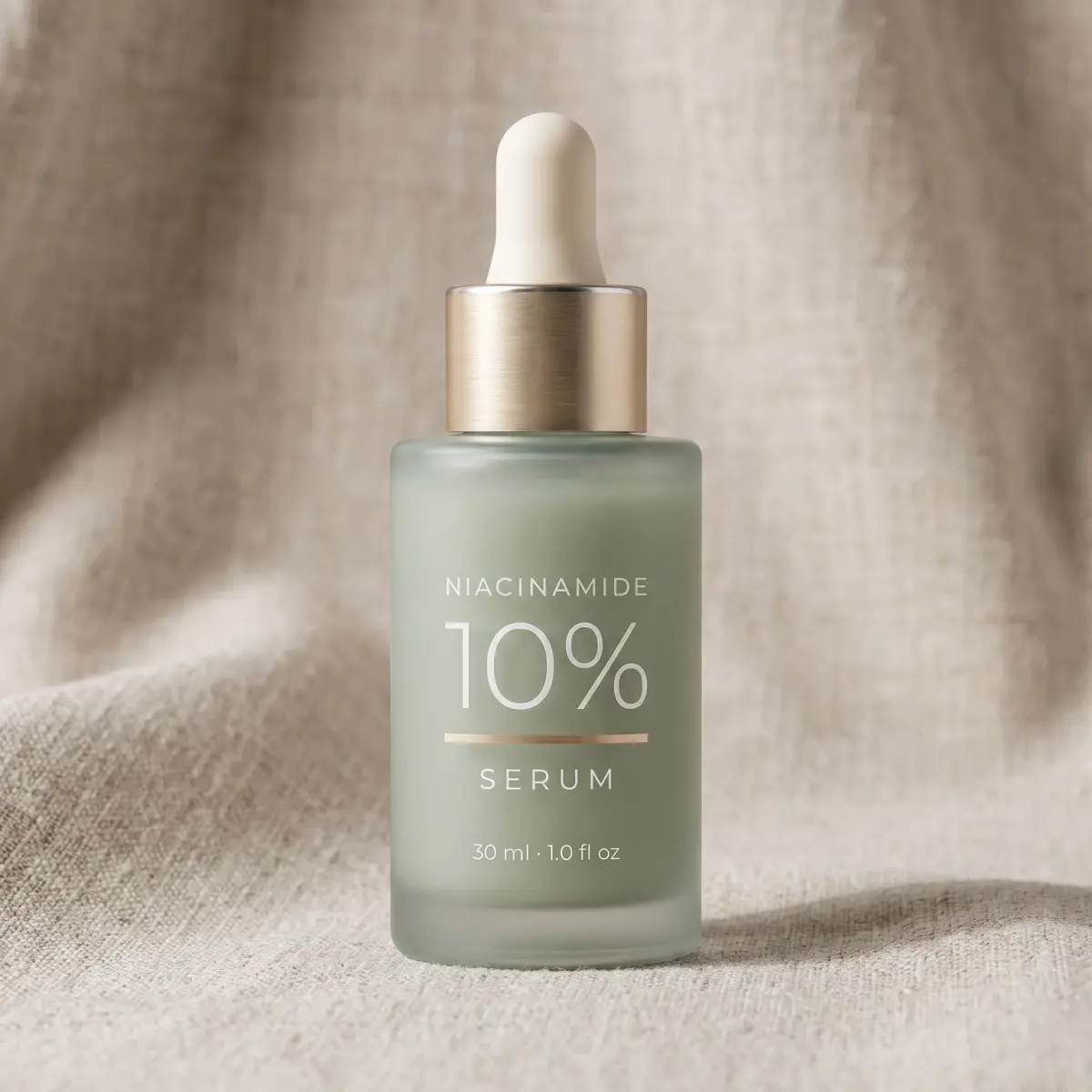
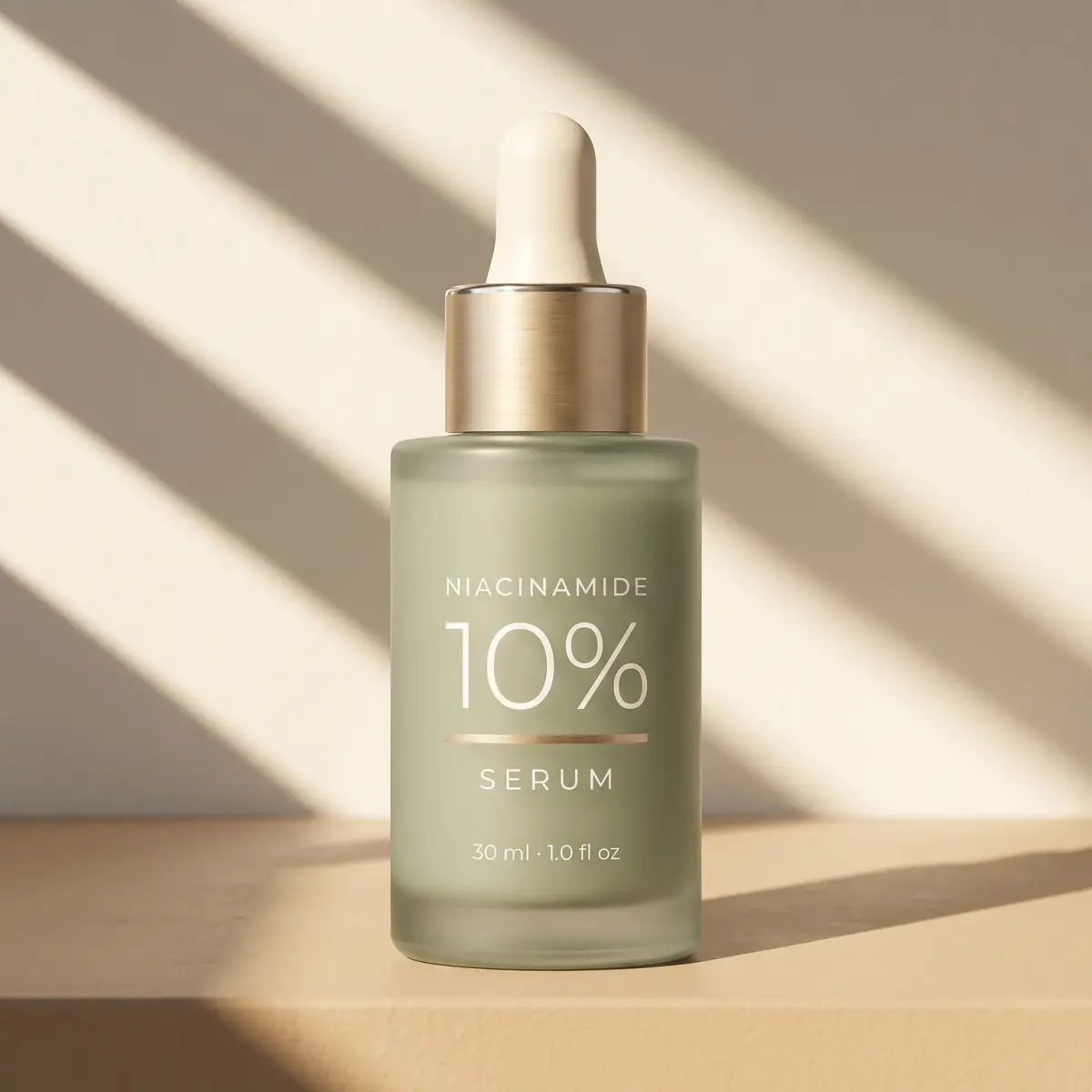
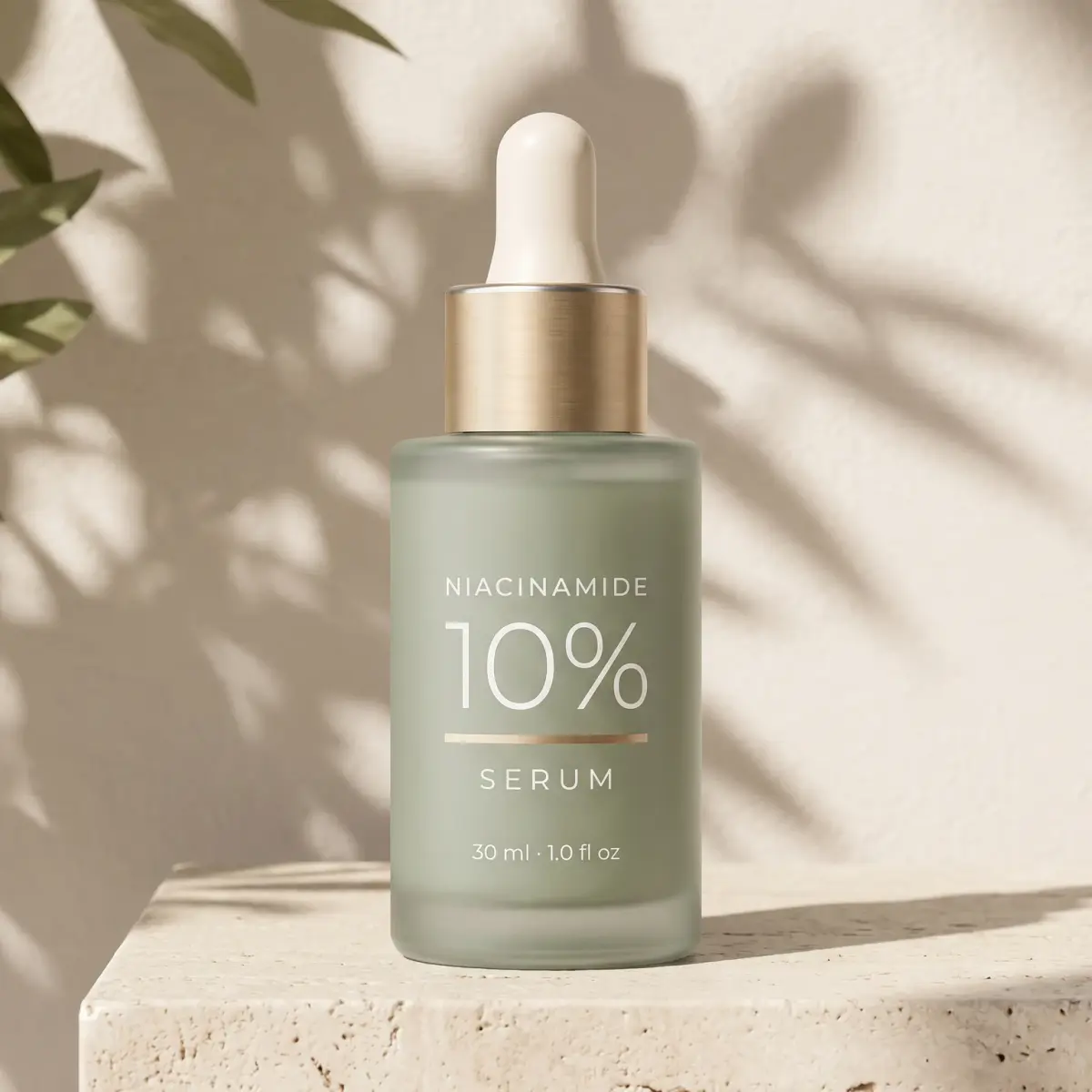
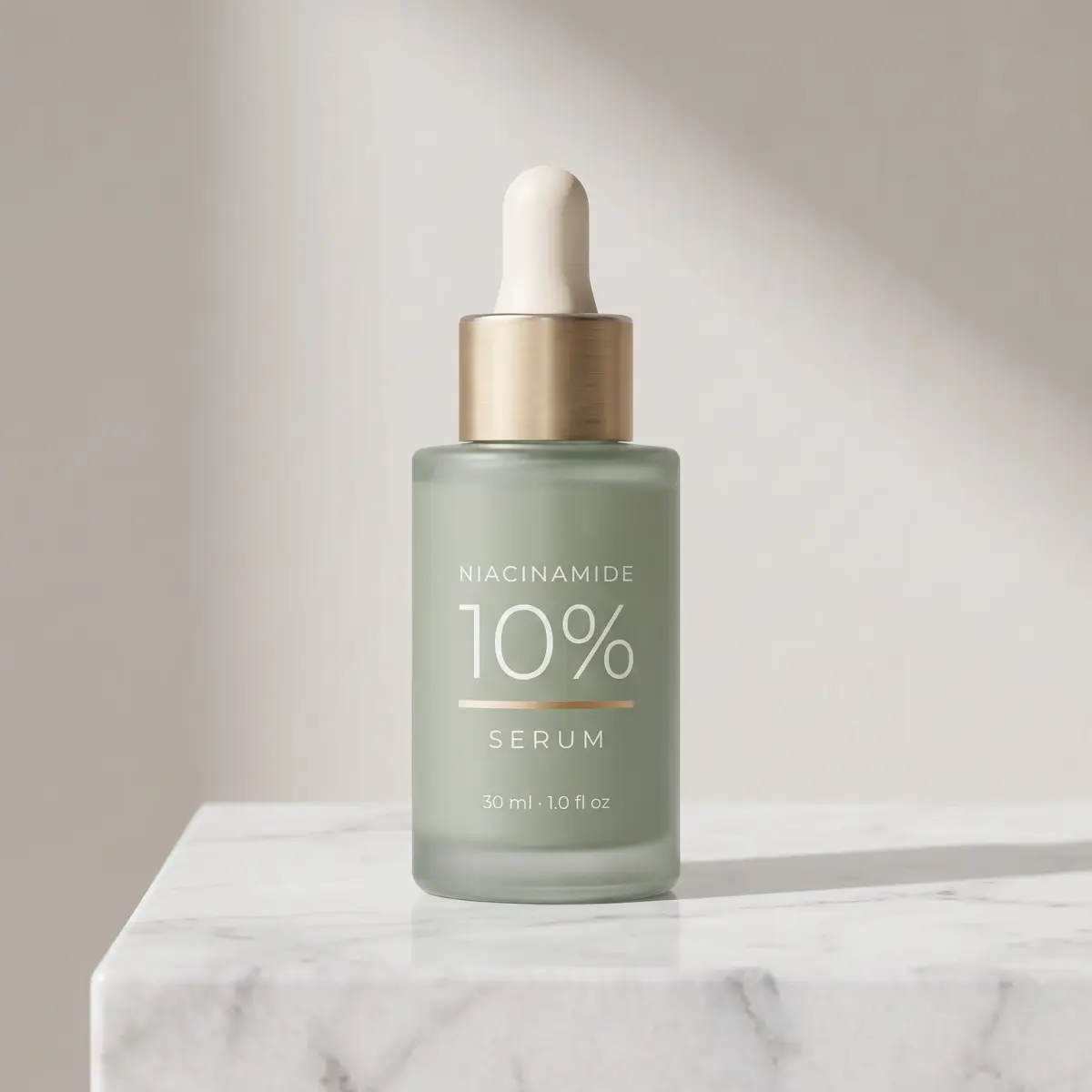
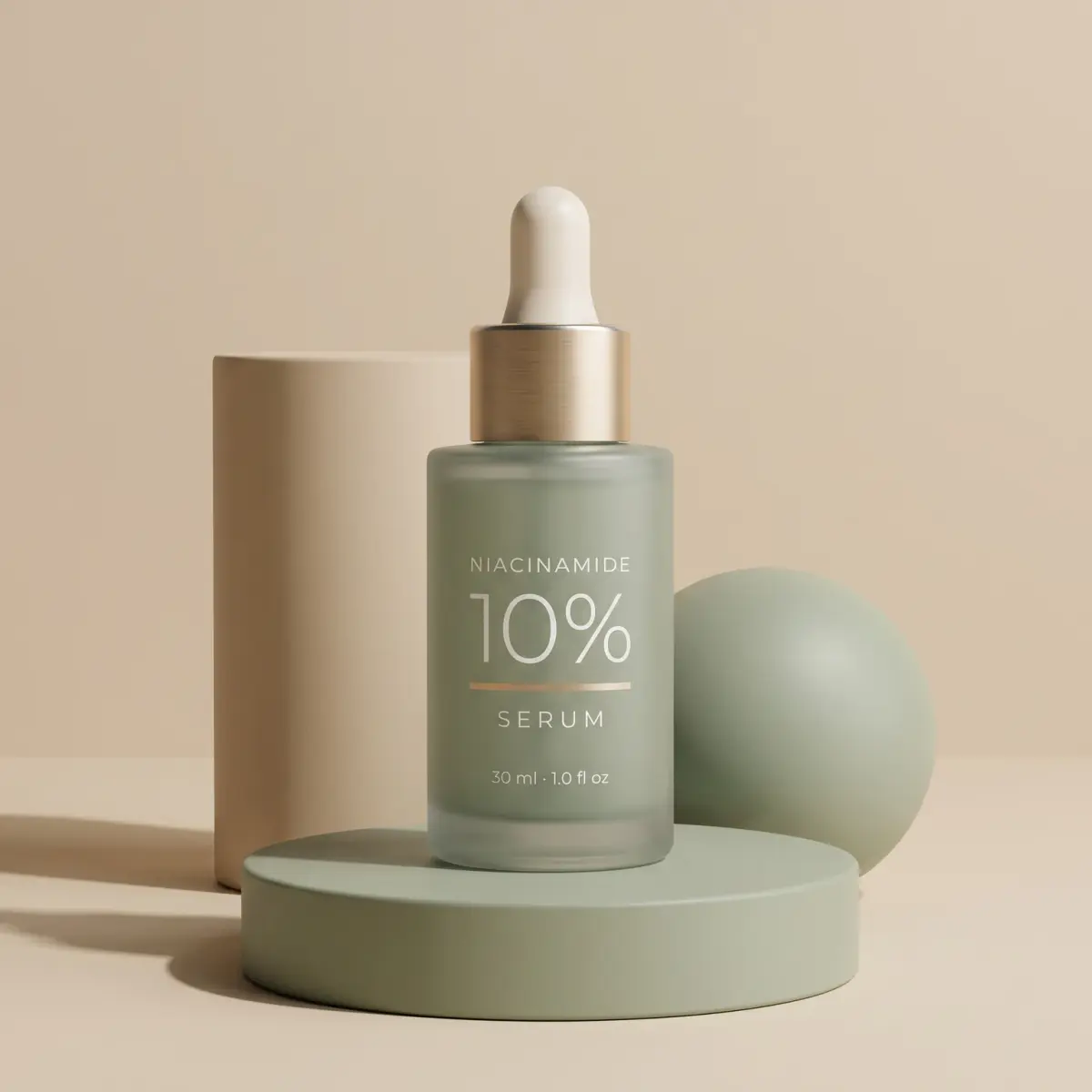
Fifteen frames, one bottle. The shape, colour, finish and label are the same in every one — only the light and the world around it change.
Cost
What it depends on.
- How many products
- The first product carries the work, because it settles the specification everything else is held to. The rest inherit it. That is why a catalogue is quoted as a catalogue rather than as a pile of separate jobs.
- How many frames each
- One clean pack shot per product is a different job from eight frames, a lifestyle set and a spin.
- How hard the product is
- Matte and opaque is straightforward. Clear glass, transparent liquid, chrome and anything with fine printed type take longer, because those are where fidelity is won or lost.
- Whether motion is in scope
- A 360 spin or a looping banner is its own piece of work, built from the stills rather than shot separately.
Every project is quoted against its own scope. Quoted per catalogue, not per image. A per-image rate would charge for the fortieth product as though it were the first, when the first is where the thinking happens and the other thirty-nine are held to it. Tell us what you are trying to do and you will get a number, not a range that moves later. Start that conversation.
Proof
Six products. One specification.
The set above is one bottle proved twice. This is the harder claim: six different objects — a tall bottle, a squeezed tube, a squat jar, a bar of soap — put through the same settings, so they belong to each other rather than each looking good on its own.
- Ground
- Warm neutral seamless, #E9E2D8, with a subtle falloff
- Surface
- Matte sweep, with one contact shadow falling to the lower right
- Key lightholds in both
- Soft, from the upper left, 35° above the horizon
- Cameraholds in both
- At product mid-height, straight on, no tilt
- Placementholds in both
- Centred, standing on a baseline shared by all six
- Scaleholds in both
- True — the frame is sized to the product, never the product to the frame
The recipe
One control, the whole set. Two of the six settings change; the other four are the same specification either way.
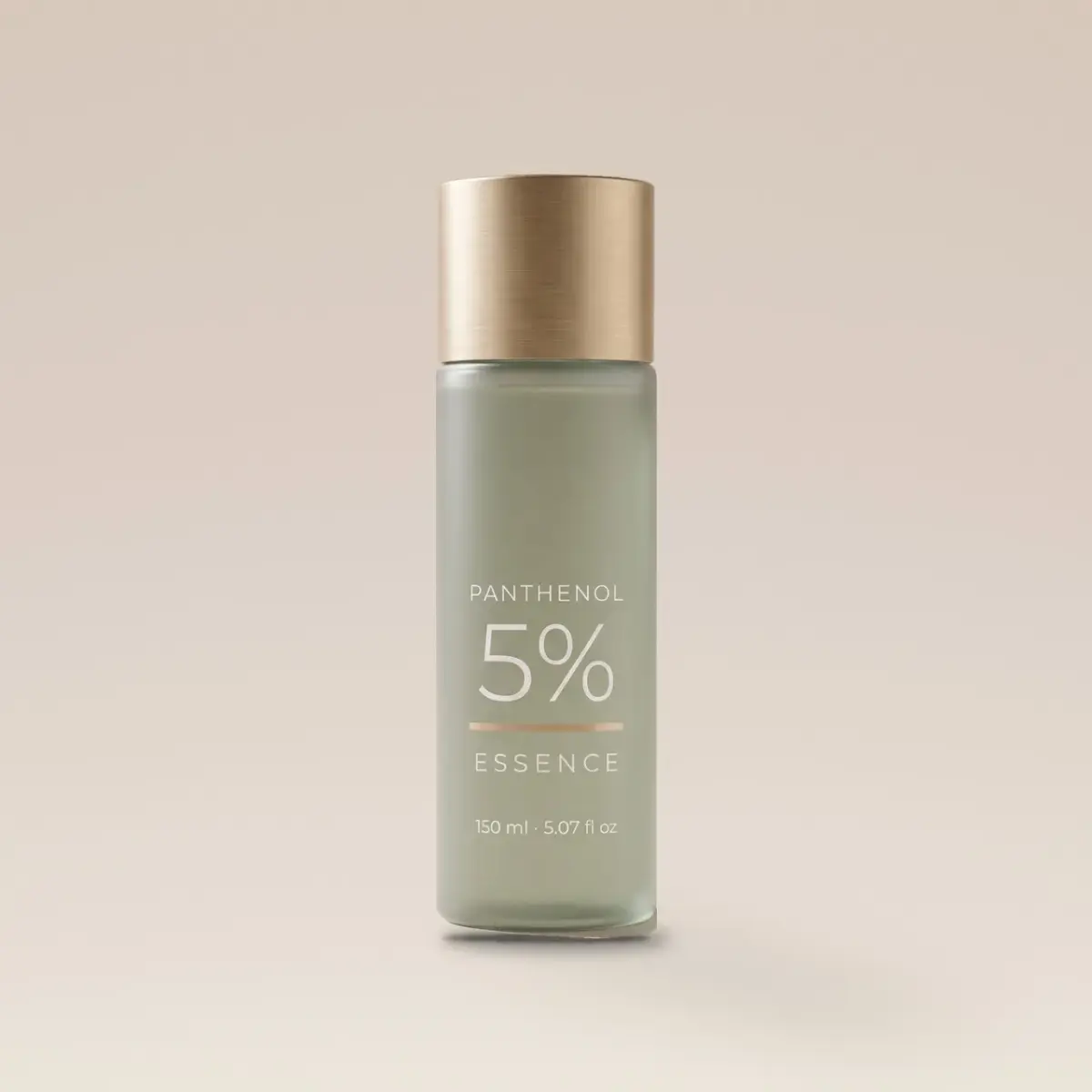
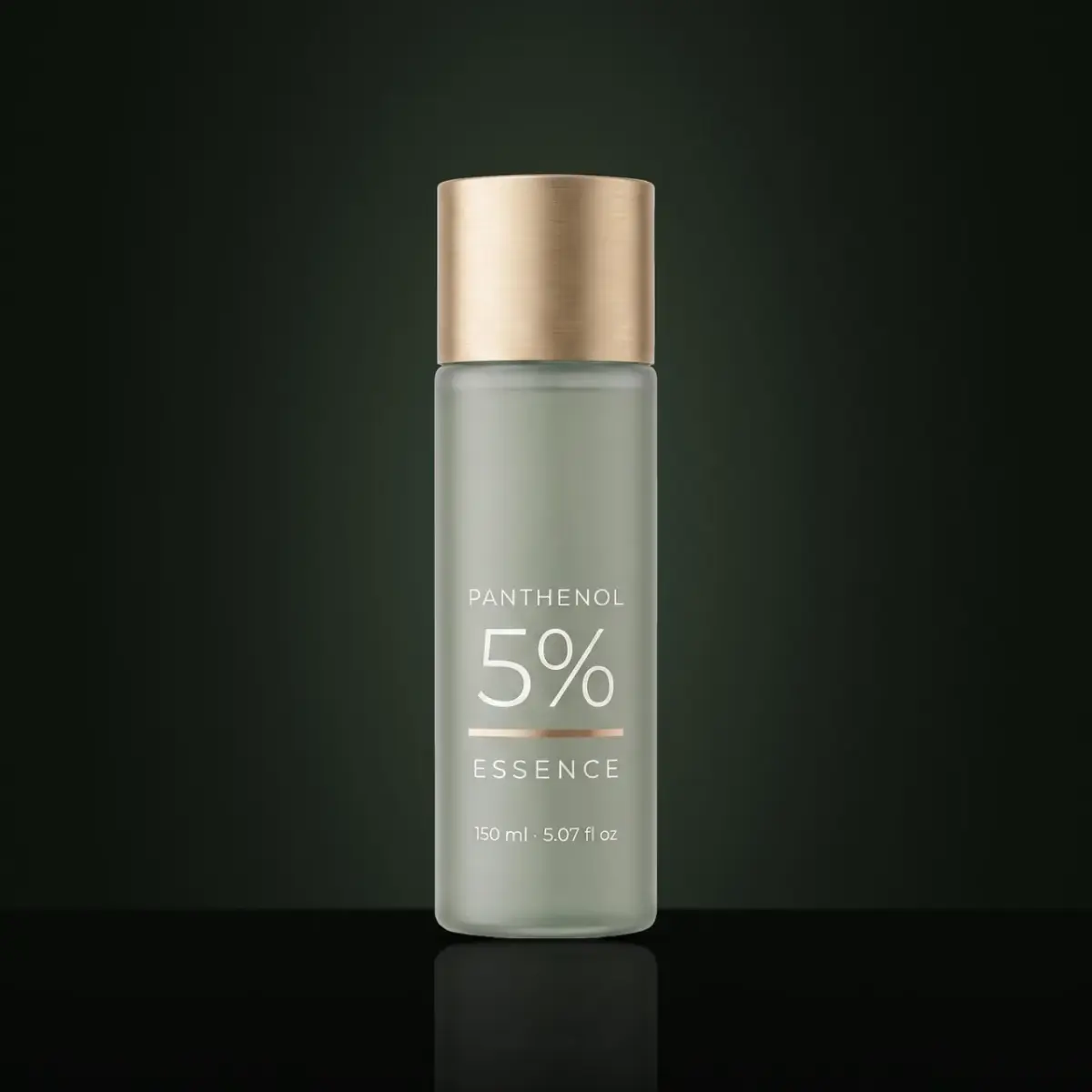 Essence 150 mlTall glass bottle168 mm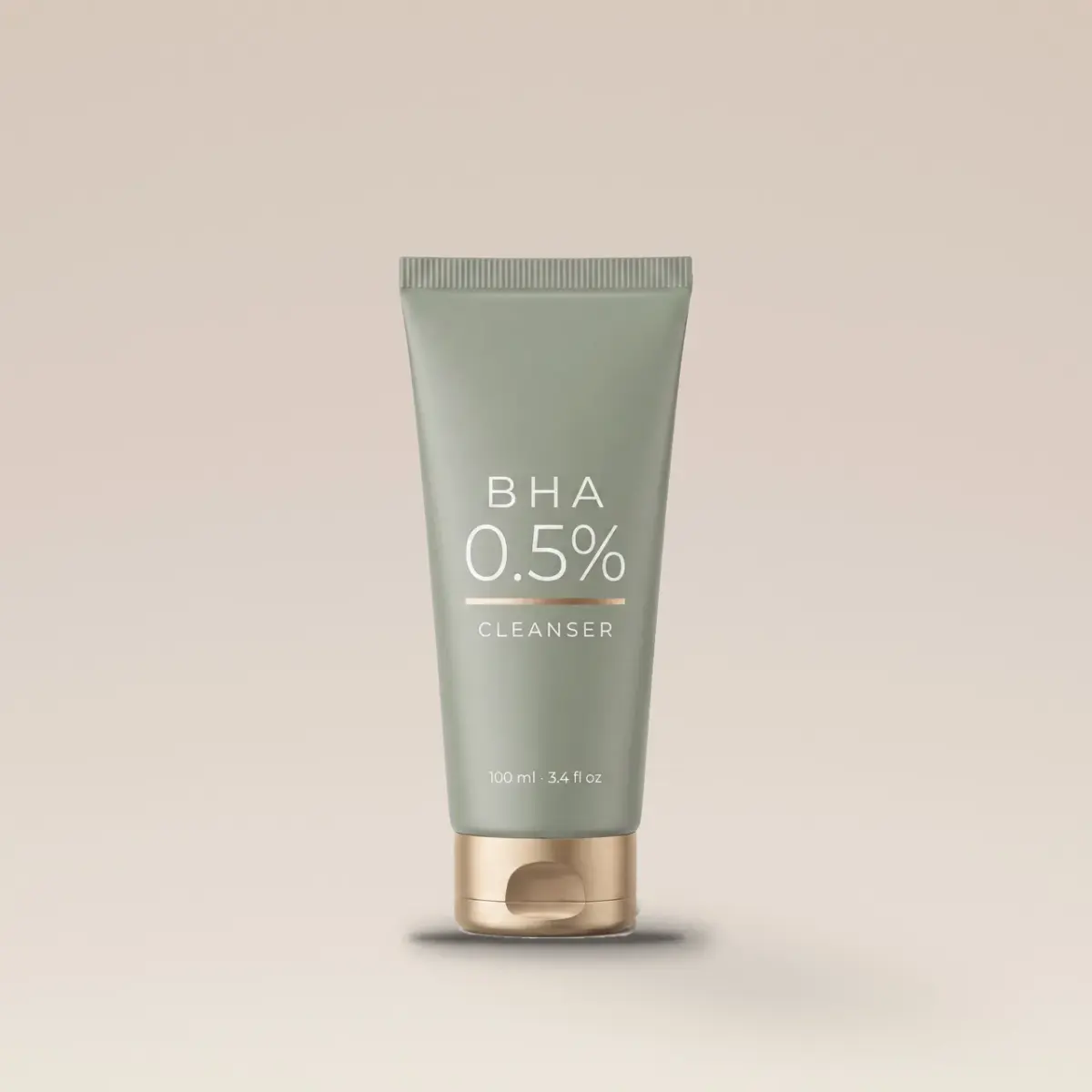
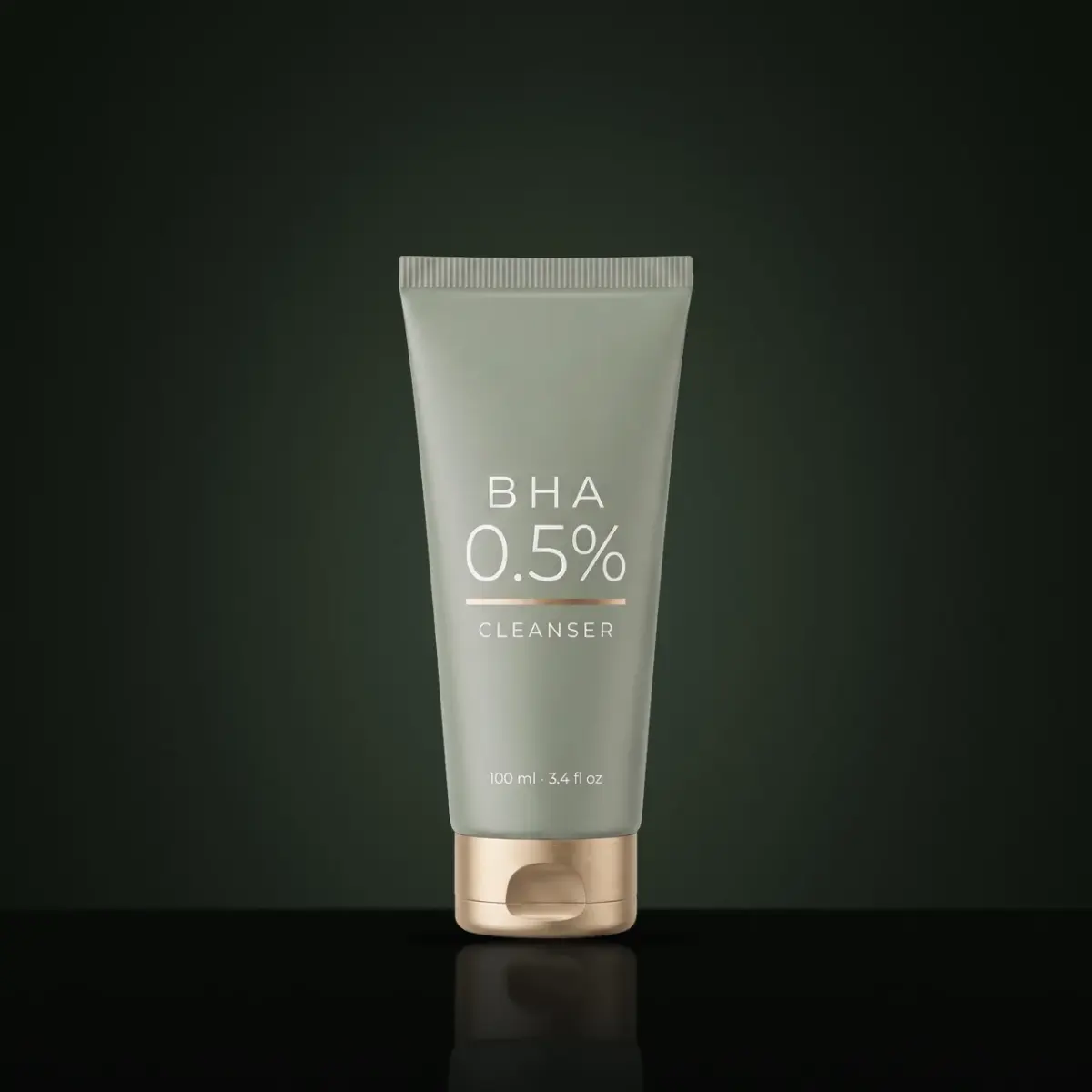 Cleanser 100 mlTube, on its cap150 mm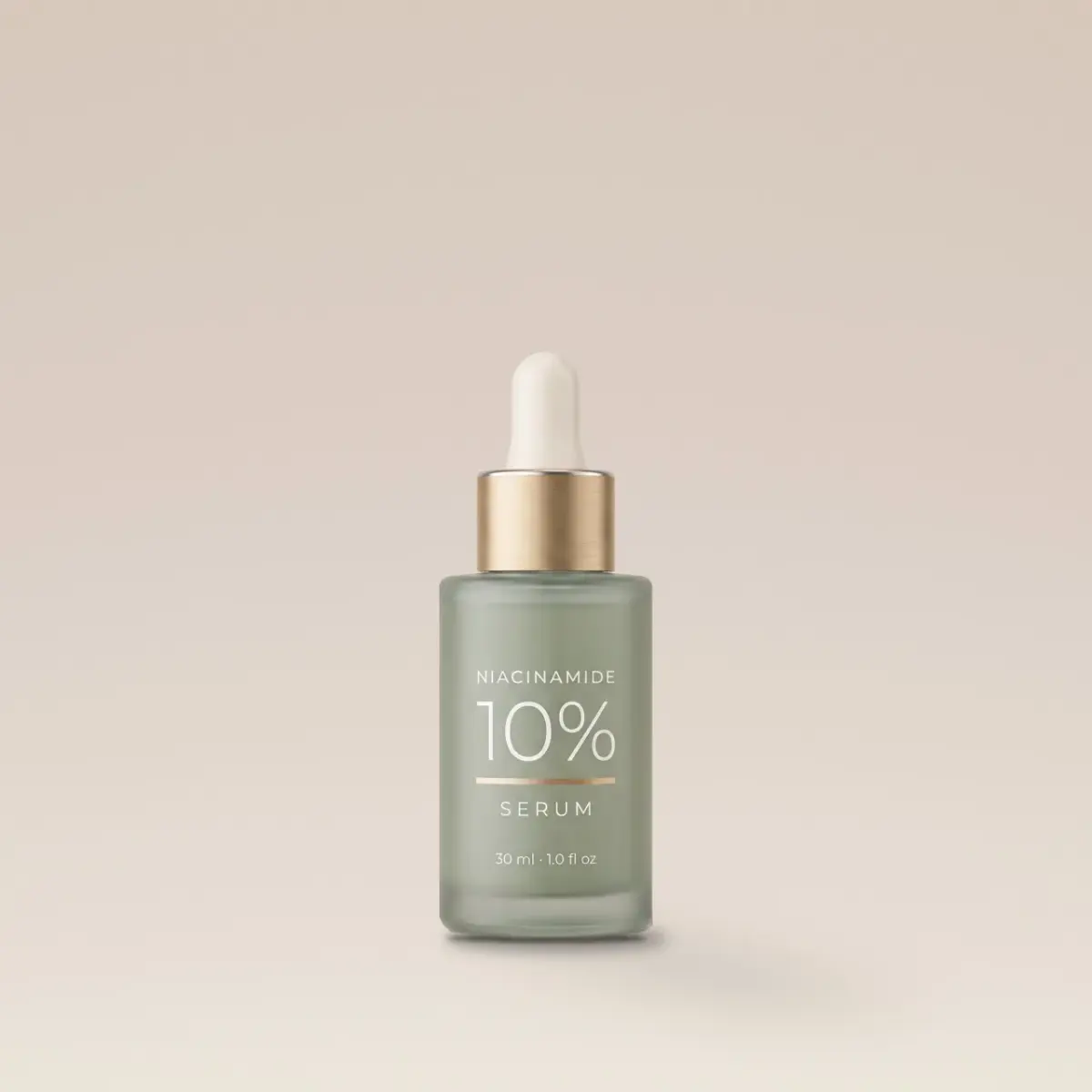
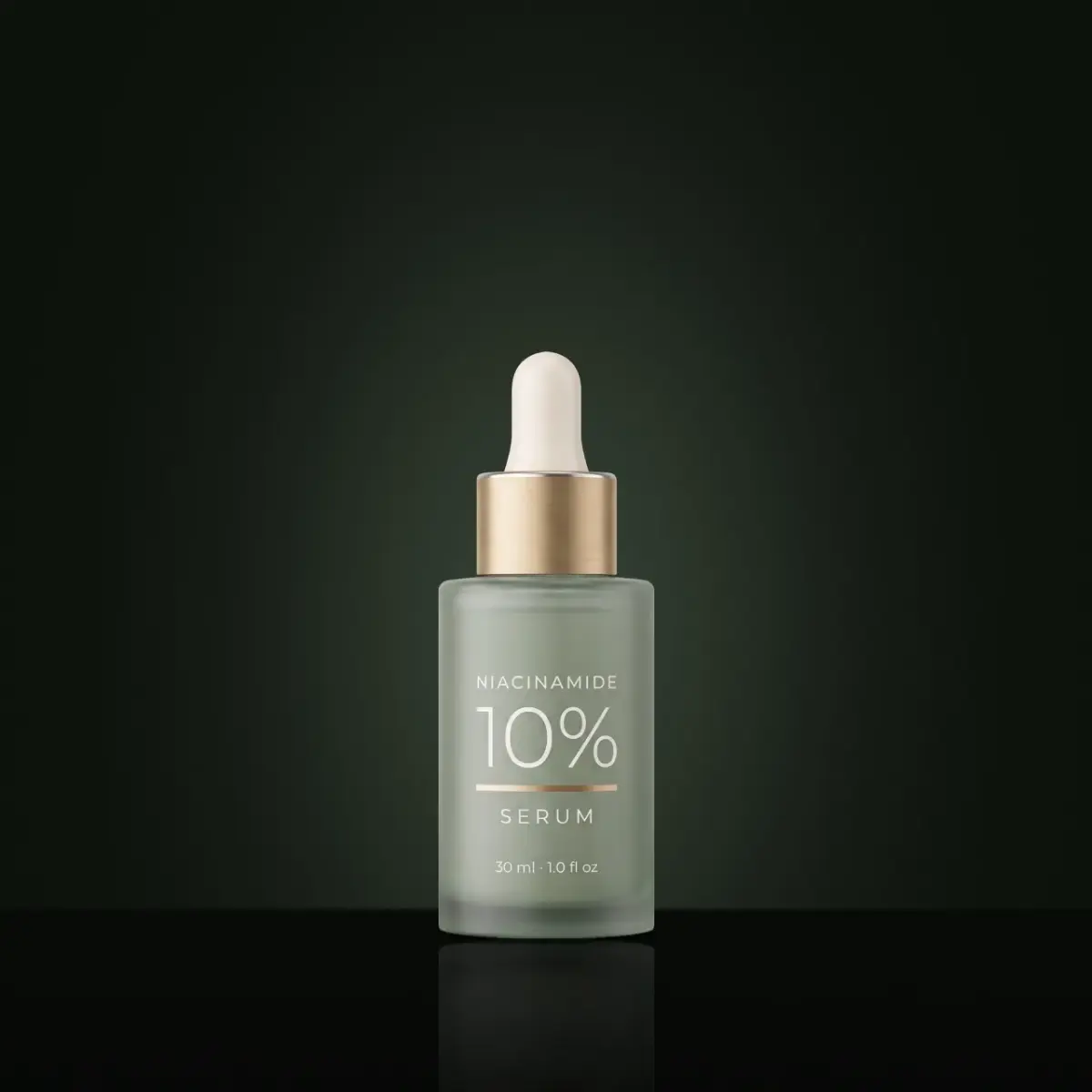 Serum 30 mlDropper bottle129 mm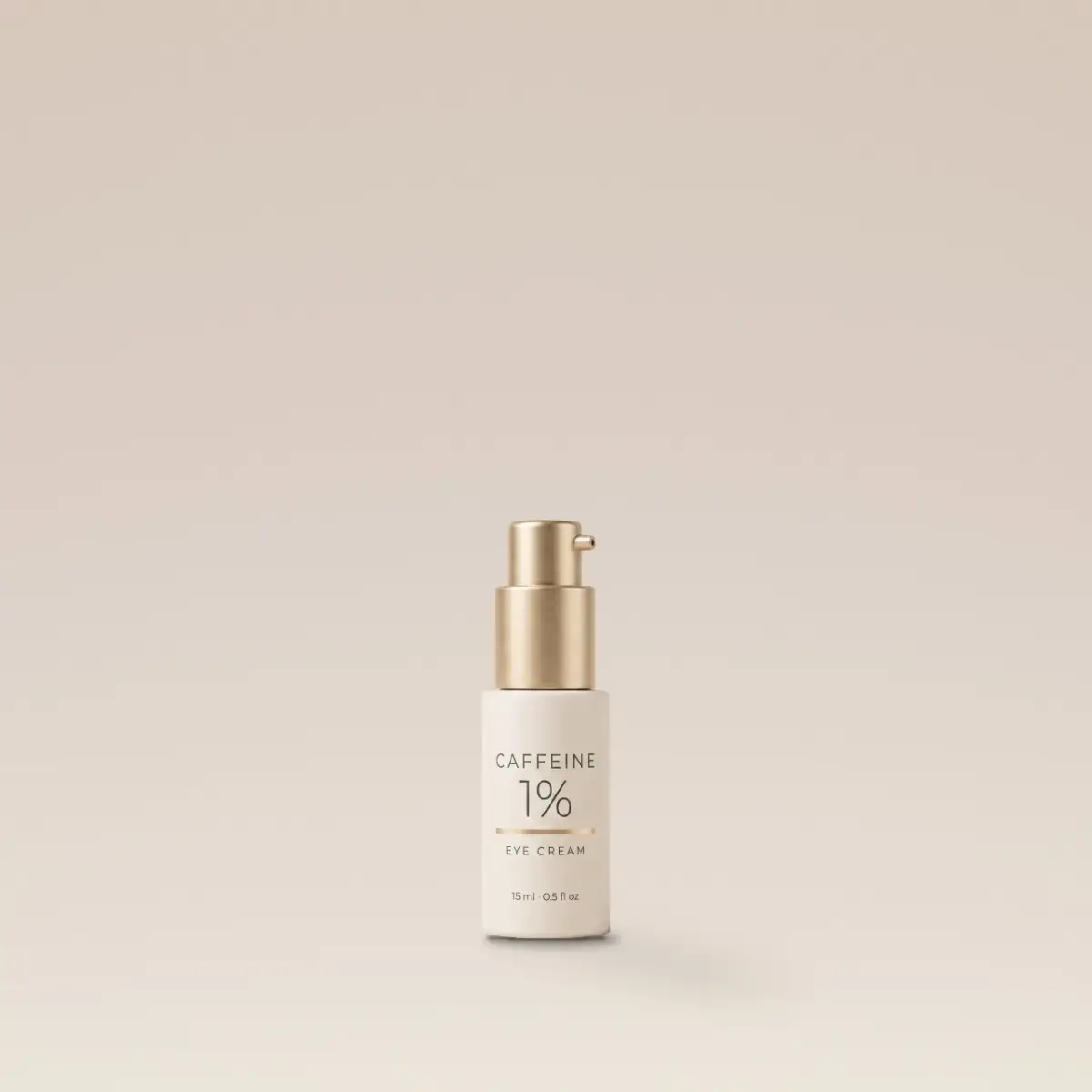
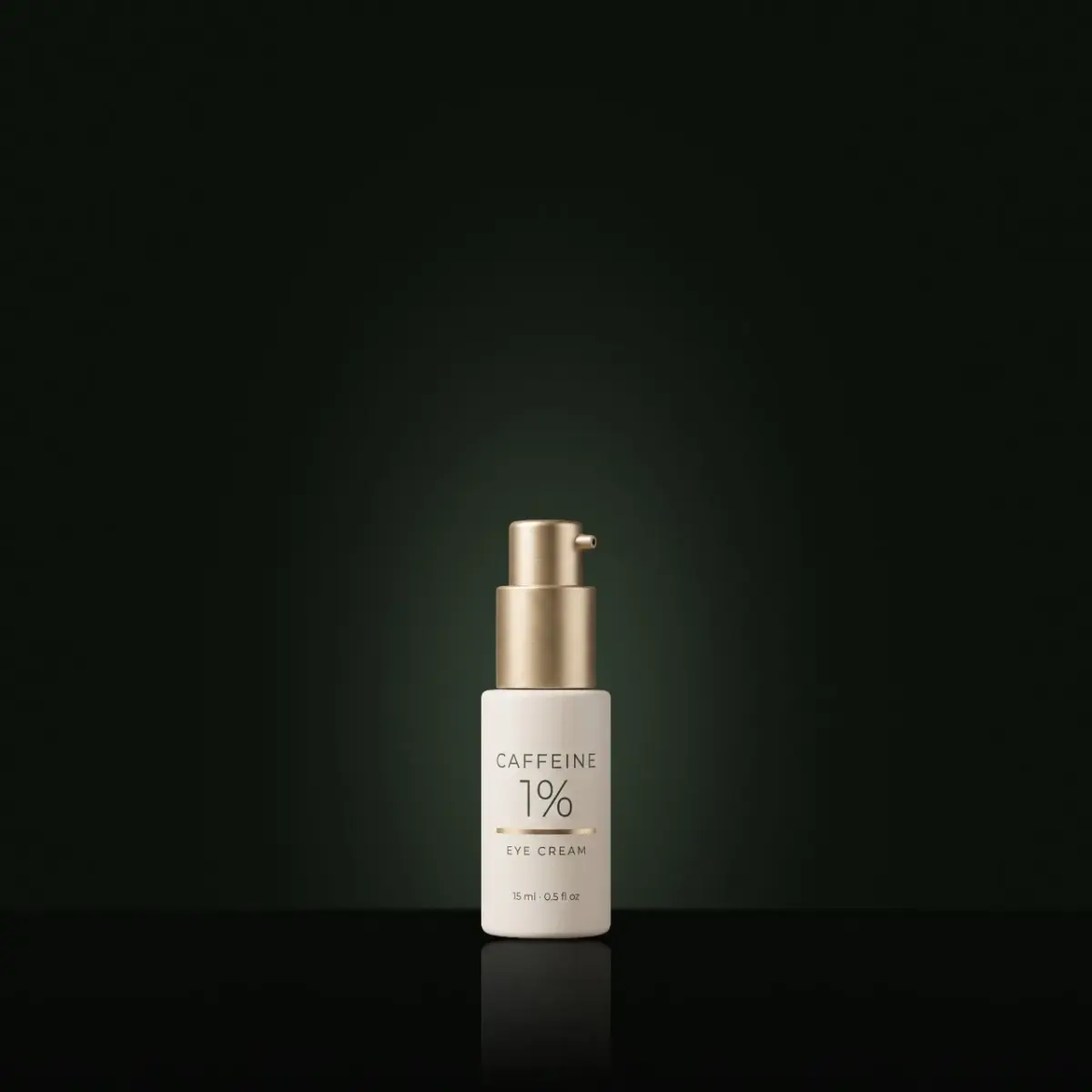 Eye cream 15 mlAirless pump92 mm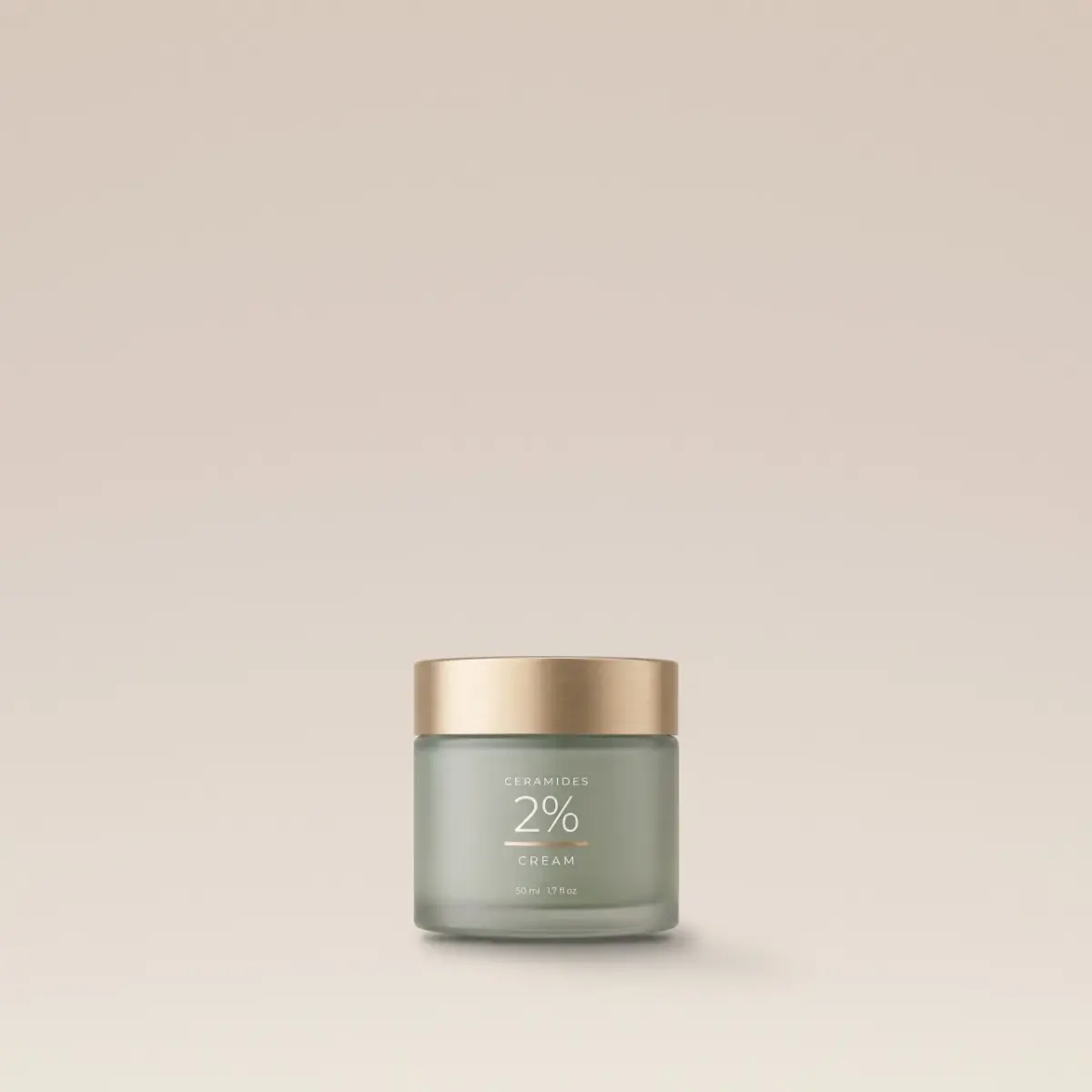
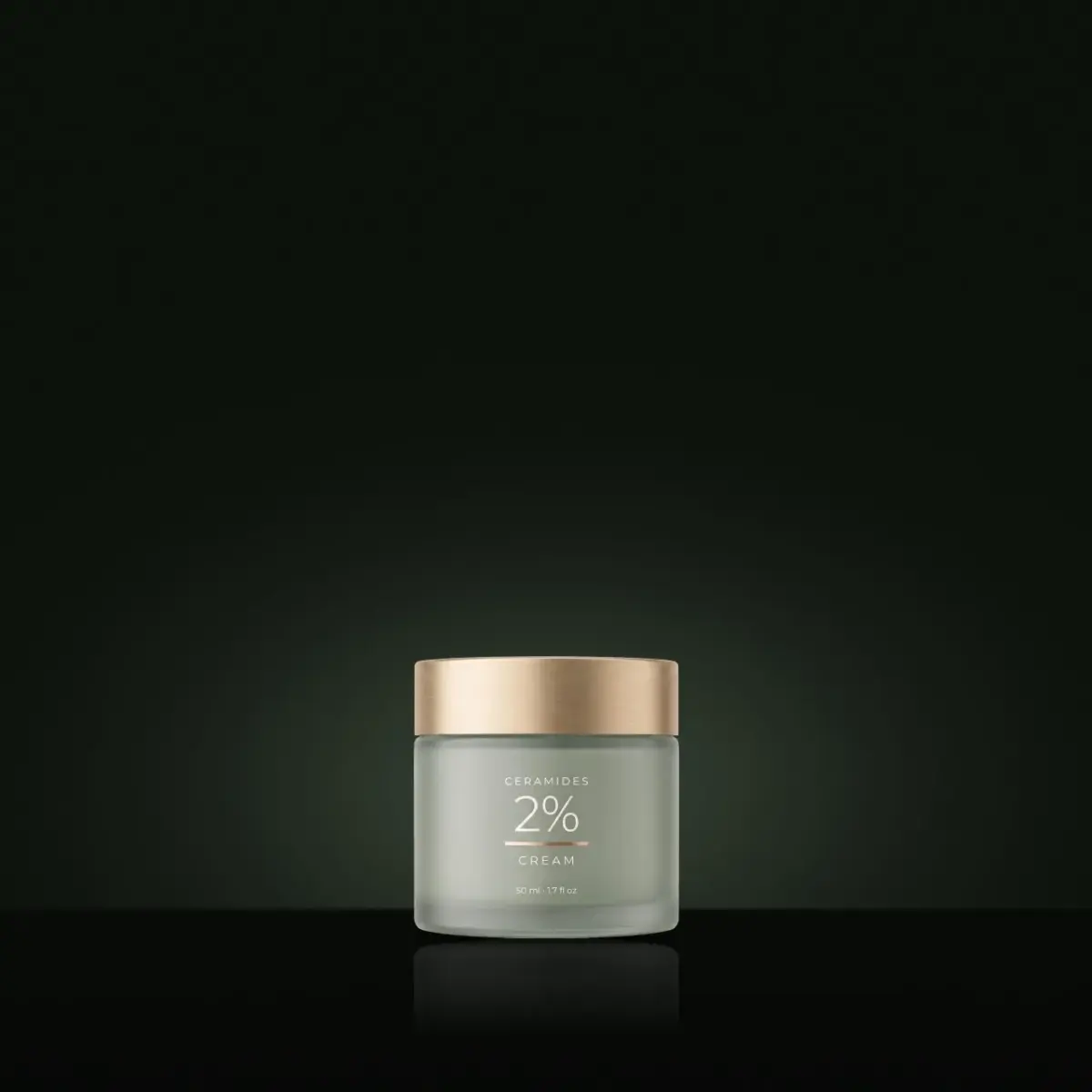 Cream 50 mlSquat jar62 mm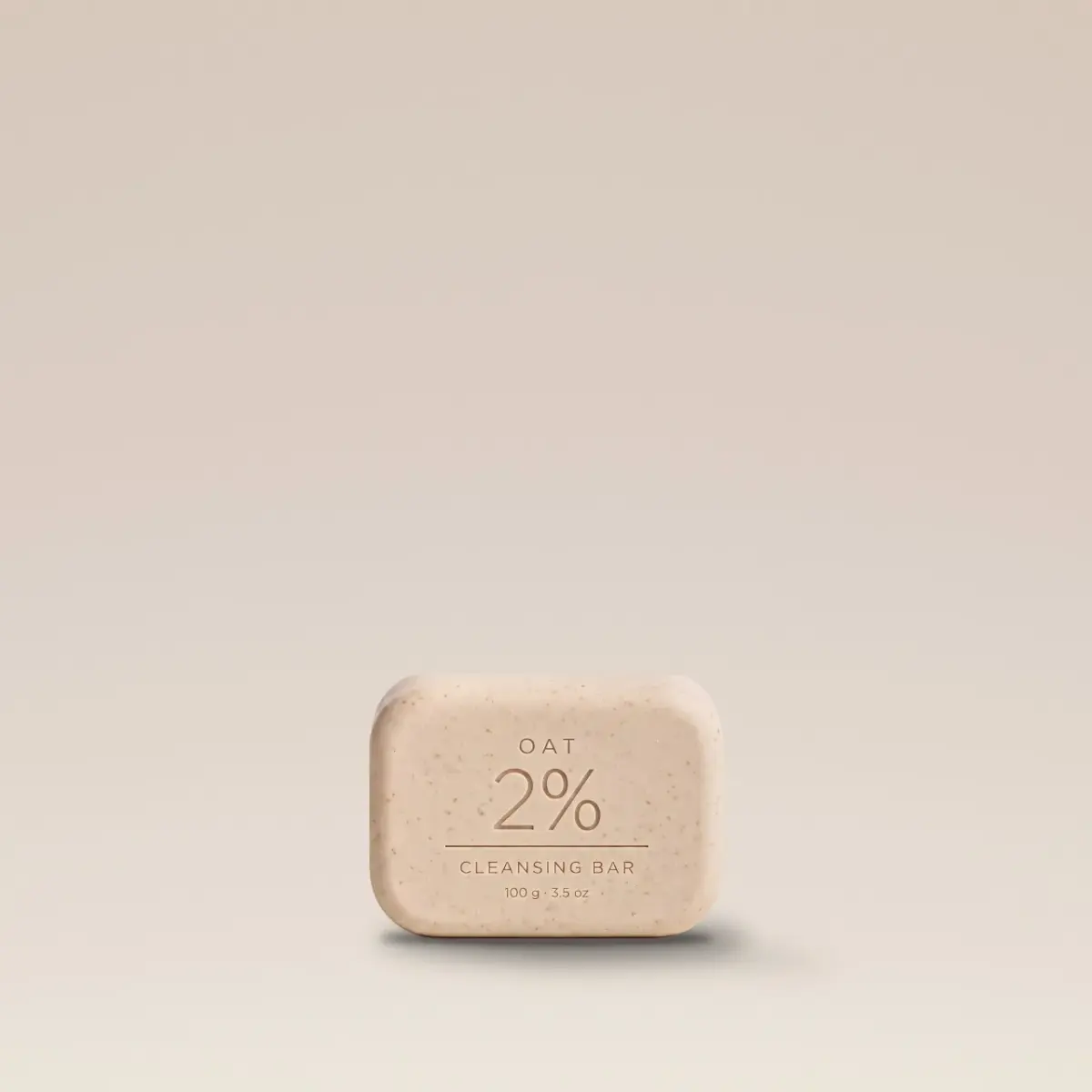
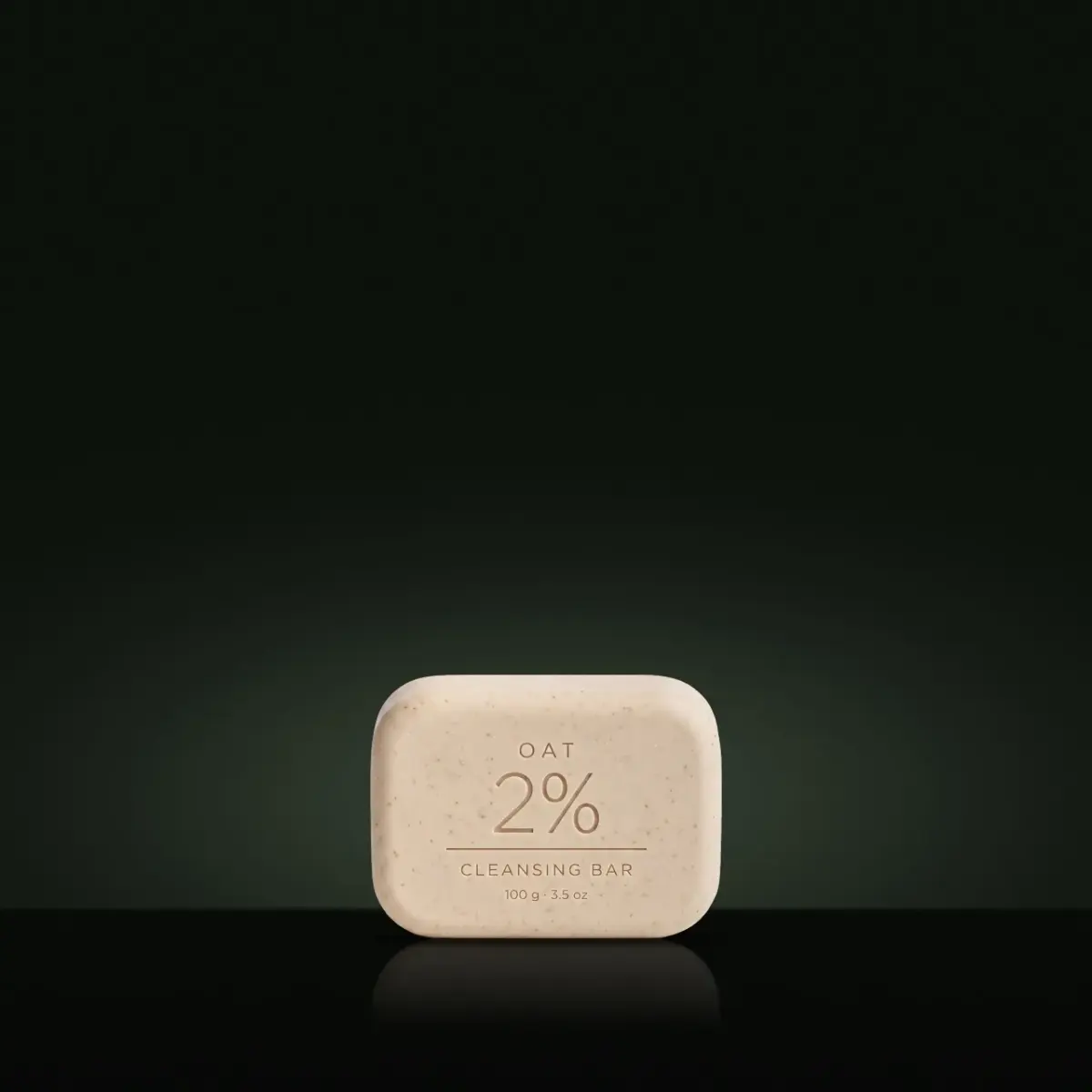 Cleansing barUnwrapped, no packaging58 mm
Measured off the delivered files rather than asserted: within the set, the baseline varies by 4 pixels in 1280 and the scale by under 4 per cent. Across the two recipes every product lands within 4 pixels of where it stands in the other — which is why the switch above changes the world and not the products.
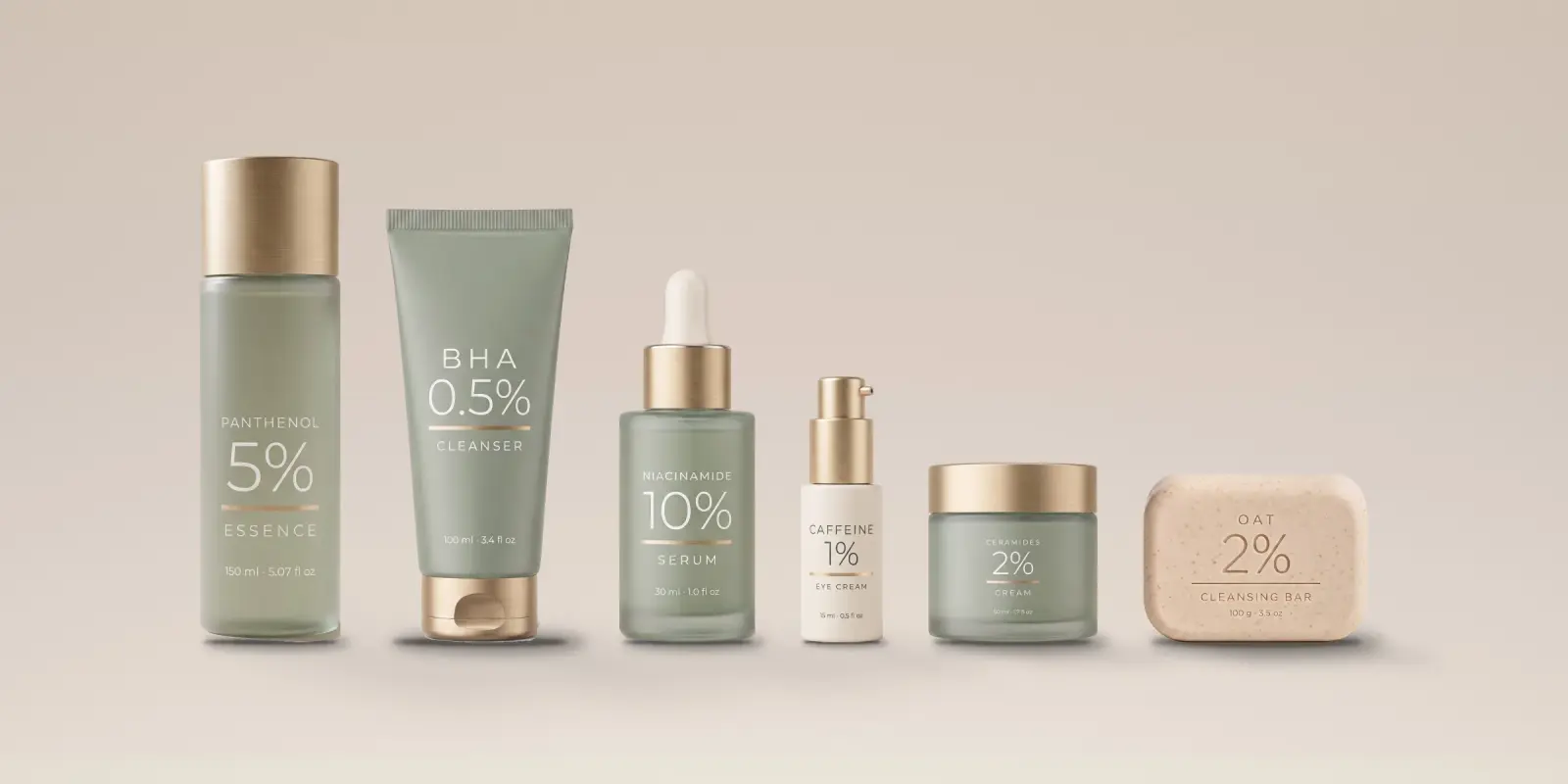
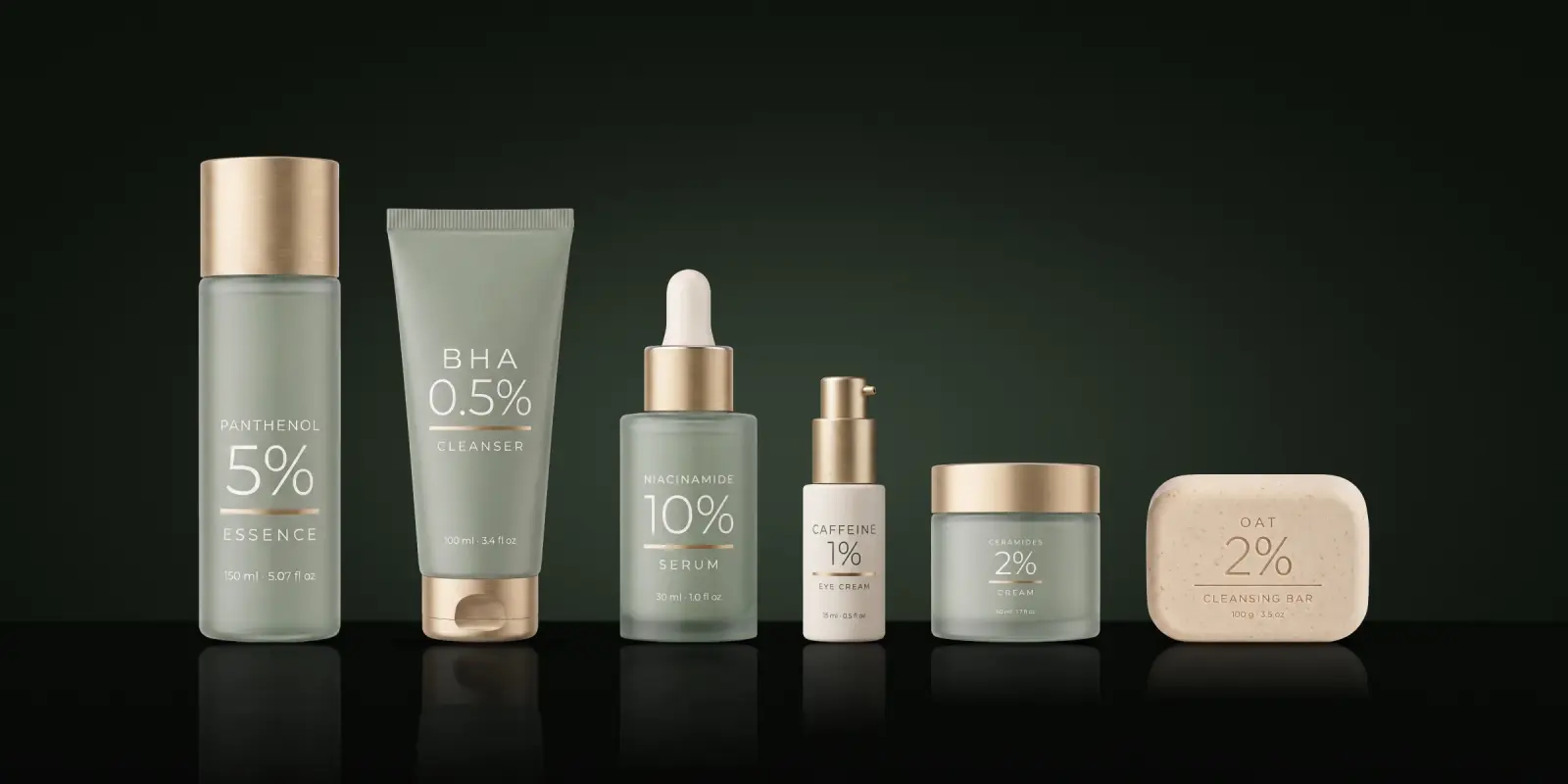
How this was made. Each product was generated from its own approved pack shot, then cut out and placed on the shared ground at its real-world size — a generator renders every product to fill its frame, so scale is set afterwards against the actual millimetres. The products themselves were not altered, and in the dark set the reflections are softened so no mirrored text is legible. They are an invented, unbranded line: no real brand, no logo, no real person.
One scene, re-composed for every placement.
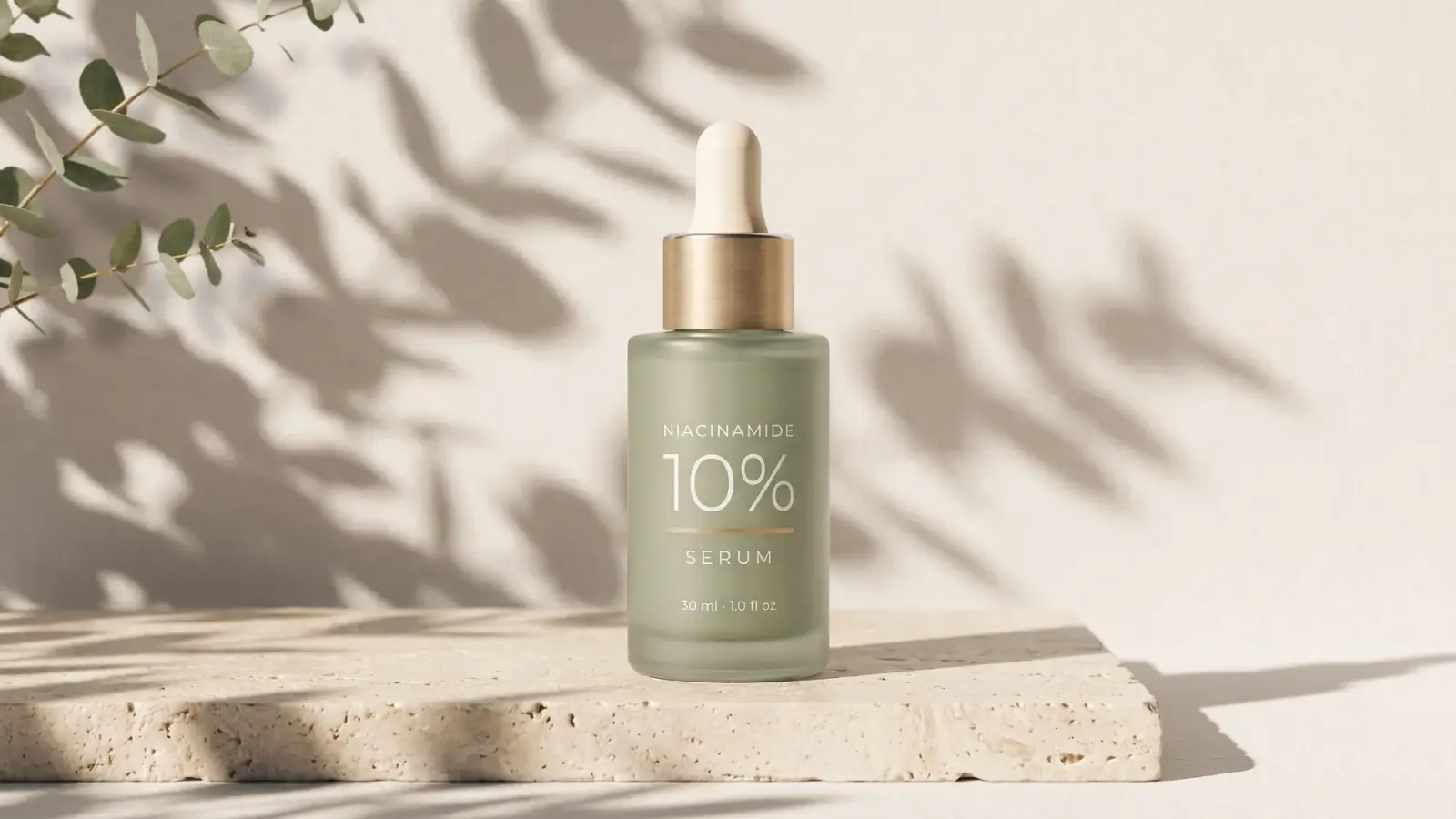 16:9Site banner1920 × 1080
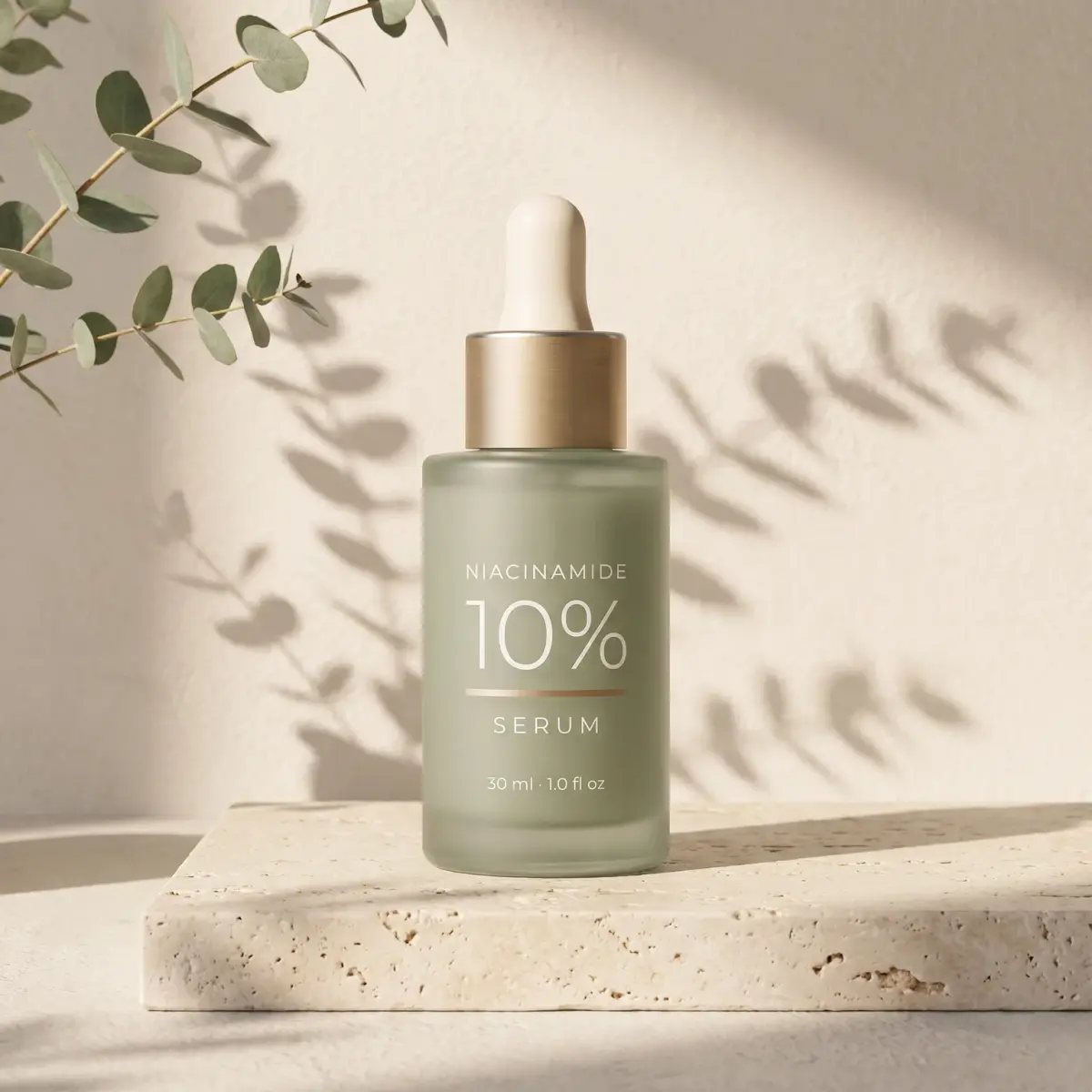 1:1Marketplace listing1536 × 1536
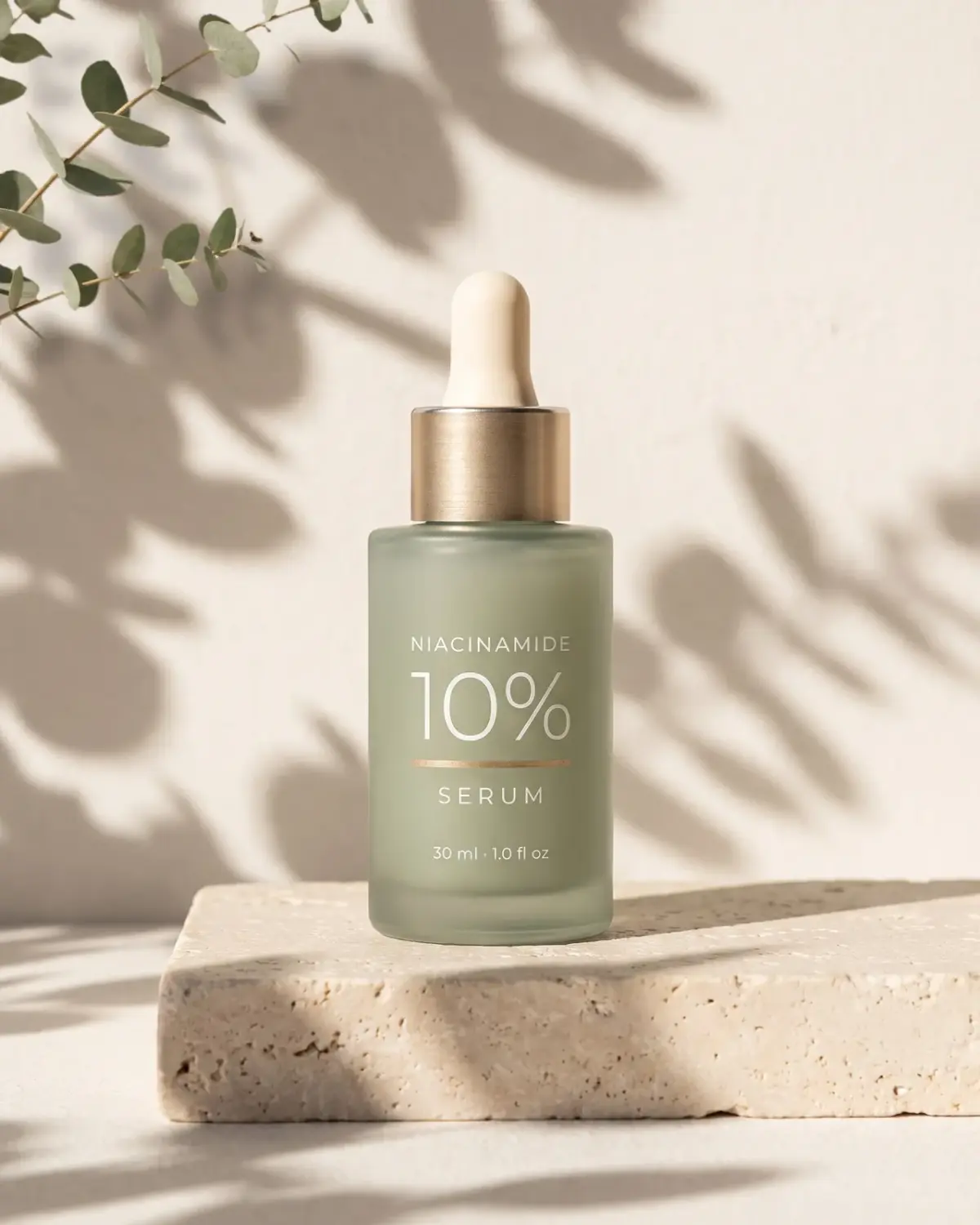 4:5Feed post1280 × 1600
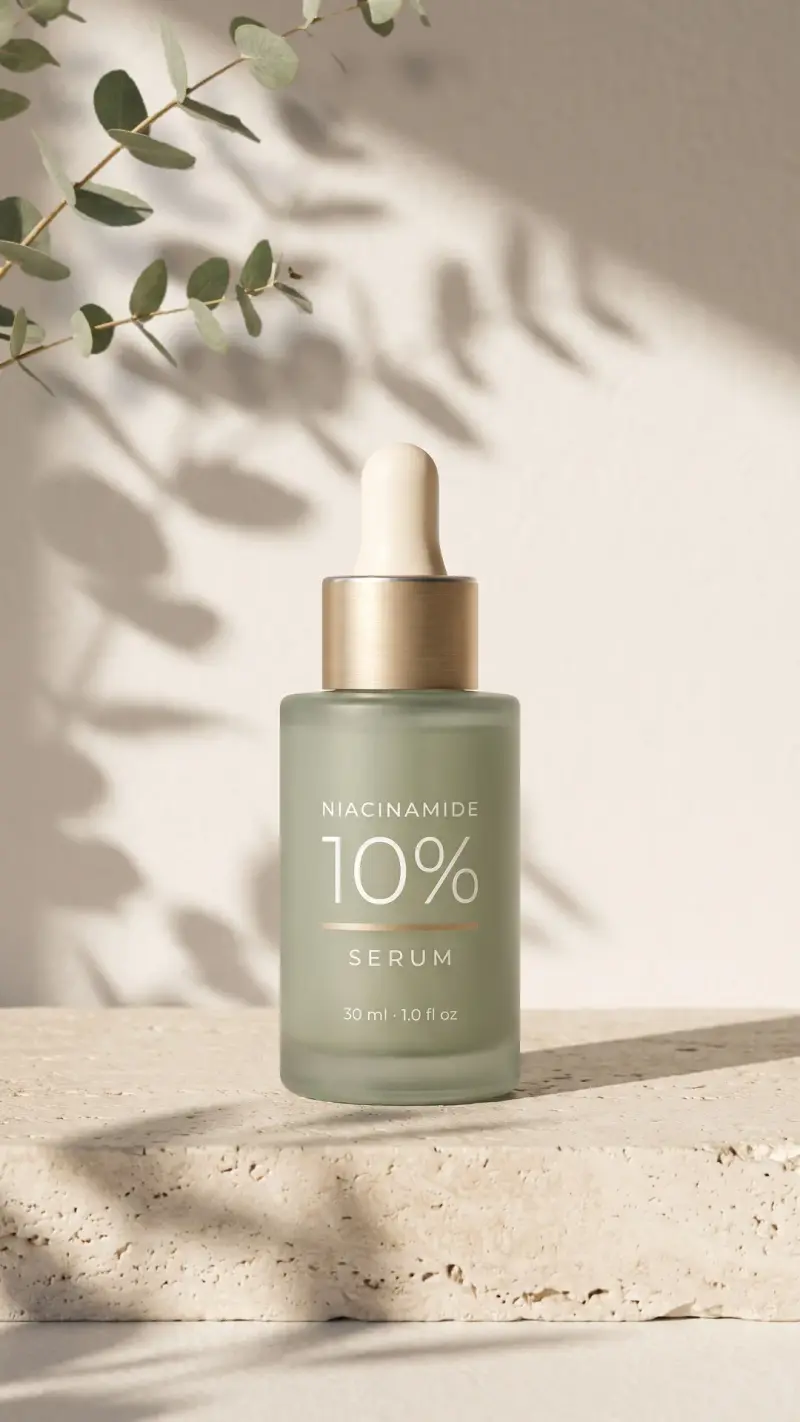 9:16Story and reel1080 × 1920
One scene, four shapes, each rendered in its own — not cut out of one master. The product is centred and fills the same share of the frame height in all four, and that constant is the specification; what changes is how much of the world fits around it. Cropping does the reverse, since the product takes up more of the frame the tighter the crop gets — which is why a banner cut from a square ends up as a close-up of a bottle instead of a banner.
Case studies using AI Visuals & Motion
- Dr Row's Eye CentreEye hospital · Hyderabad
- Calchroma Minerals & AdditivesMinerals & additives supplier · India
- Caere IndiaFacility management · India
- TradieGetConstruction delivery · Australia
- Amazing FacadeFacade systems
- Hast SamudrikaPalmistry
- LucknowaleNorth Indian cloud kitchen
- Chatori ChaatIndian chaat restaurant
- The Travelling PantsHandmade Indian luxury fashion
Questions
The ones people actually ask.
Is it still my actual product in the picture?
Yes, and that is the line we do not cross. The shape, colour, finish and label are the ones you sent us; what changes is the light and the world around it. Where a frame is deliberately art-directed we label it as stylised, so you always know which kind you are looking at.
Will marketplaces accept these?
The catalogue-accurate frames are made for exactly that — plain ground, true colour, product unaltered, sized to the platform. The stylised ones are for banners and social, and are marked so. Most marketplace rejections are about misrepresenting the product, which is the thing we will not do.
Do you need the physical product?
Usually not. A decent photo is enough, and a phone photo is often enough. Where the product has fine printed type, an unusual finish or a transparent element, having the real thing to shoot once first gives a much better master to work from.
What about people in the images?
Either is fine. A real person — a model, your founder, your brand ambassador — is covered by the arrangement you already have with them, and that holds whether we photograph them or generate the imagery. A person who is not anybody real needs no such thing, because there is nobody to ask. What we will always do is tell you which of the two you are looking at.
Can you match imagery we already have?
Often yes. If you have a set you are happy with, it becomes the recipe and new products are made to match it rather than to a house style of ours. That is usually the right answer for a brand with existing photography it does not want to replace.
Do we own the images?
Yes, at full resolution, with no licence retained by us and no per-use fee. Use them on the listing, in ads, in print, on a wall.
Where this usually goes next
Next step
Send a photo of your product
Whatever you have — the phone shot on the counter is genuinely fine. We will take one product through to finished frames first, a paid piece of work you keep either way, and that tells you more about whether this works for your catalogue than any amount of talking about it will.